.avif)
Why do we celebrate Black History Month in February? Why is there an entire month dedicated to it? How did it start?
In 1926, Dr. Carter G. Woodson, the founder of the Association for the Study of African American Life and History (ASALH), launched Negro History Week. He chose the second week of February to coincide with the birthdays of Abraham Lincoln and Frederick Douglass. His goal was not merely to celebrate, but to institutionalize the study of Black history to ensure it wasn't erased from the American story.
This year, the ASALH has dedicated the 2026 theme to "A Century of Black History Commemorations." We are following their lead. At Adventure Nannies, we are using this centennial milestone to turn the lens inward on our own industry.
The history of domestic work in America is inextricably linked to Black history. For the last 100 years, while Dr. Woodson’s movement was fighting for historical recognition, Black domestic workers were fighting for professional recognition. The standards we champion today—Guaranteed Hours, legal pay, and written contracts—are not modern inventions. They are the legacy of Black women who organized, marched, and legislated to turn "domestic servitude" into a respected profession.
From the organizers of the past to the leaders of the modern We Dream in Black movement, this is the Nanny Edition of that century-long fight for dignity.
1926: The Silent Workforce
When Dr. Woodson established Negro History Week in 1926, professional nannies as we know them today did not exist in the public imagination. Instead, the industry was defined by the servant dynamic. In the wake of the Great Migration, thousands of Black women moved North seeking freedom, only to find that the only jobs open to them were in private households. While white immigrant women began moving into factory and office jobs, Black women were effectively segregated into domestic service.
This era marked a painful but pivotal transition from live-in service to day work. Black domestic workers fought hard for the right to live in their own homes and commute to work—a radical act of reclaiming their time and their families. However, without labor laws, this independence came at a cost: the rise of unregulated day markets where wages were unpredictable and exploitation was rampant. This was the reality of the workforce in the year Black history began to be officially celebrated.
1935: The Exposé of the Bronx Slave Market
In the midst of the Great Depression, a brutal reality existed on the street corners of the Bronx. Black women, excluded from many labor markets and New Deal protections, would stand on corners waiting to be hired by wealthy families for day work. The pay was pennies; the conditions were unregulated.
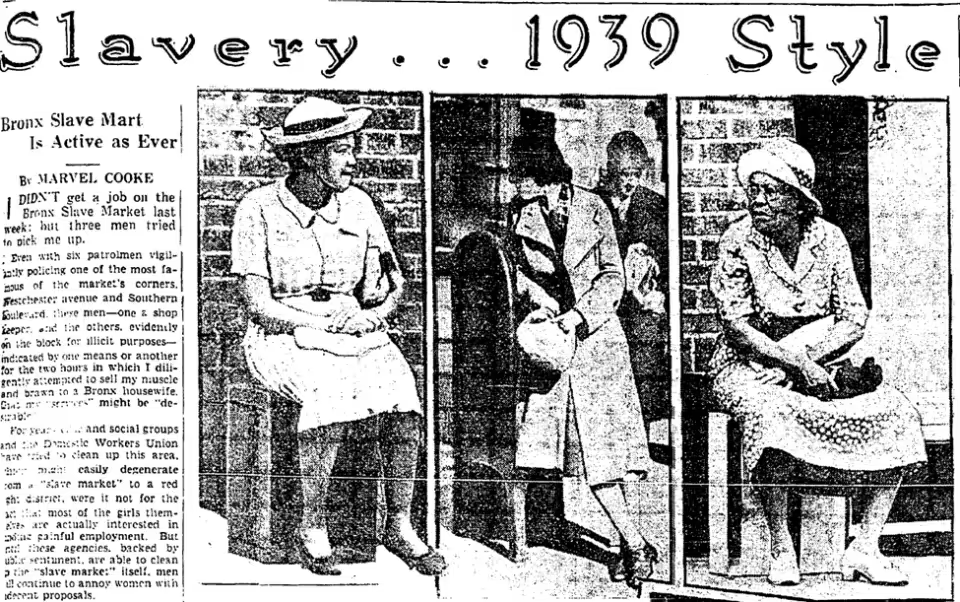
Two Black journalists, Ella Baker and Marvel Cooke, did something radical. They went undercover. Posing as domestic workers, they stood on those corners to experience the exploitation firsthand. Their resulting exposé in The Crisis magazine, titled "The Bronx Slave Market," didn’t just shock the public; it sparked the first major wave of domestic worker unionization in New York. They proved that domestic work was work, and it deserved the protection of the press and the public.
1938: The Great Exclusion
Three years later, the United States passed the Fair Labor Standards Act (FLSA), the massive New Deal law that gave us the minimum wage and the 40-hour workweek. However, to pass the bill, Southern lawmakers demanded that agricultural and domestic workers—who were predominantly Black—be excluded.
This strategic exclusion created the "under the table" culture that the industry still fights today. When we talk about professional pay at Adventure Nannies, we are directly addressing this gap created specifically to exclude worker’s rights from the Black community.
1955: The Walking Infrastructure
We know about Rosa Parks and the Montgomery Bus Boycott. But who sustained the boycott for 381 days? It was the city’s domestic workers.
.avif)
Thousands of Black nannies walked miles to work every day rather than ride segregated buses. Others organized complex carpools, effectively building their own transit system overnight. Their refusal crippled the bus system, proving that the city’s economy relied entirely on their labor. And orginized support and mutual aid allowed workers to continue the strike, even if it meant risking losing their jobs. They showed that nannies were not just "help"—they were the infrastructure that allowed the rest of the city to function.
1968: The Strategist of Atlanta
In 1968, a domestic worker named Dorothy Bolden founded the National Domestic Workers Union of America (NDWUA) in Atlanta. Bolden was a visionary who rejected the idea that nannies were unskilled.
She famously said,
"See, we had to be brilliant, because all we could do is think... And you sure to God didn't get credit for your ideas. And you had some brilliant ideas."

Bolden’s strategy was brilliant. She organized domestic workers during their bus rides to work. She taught them how to negotiate wages, but she didn't stop there. She required every member of her union to register to vote. She understood that for nannies to be respected, they had to be a political force. She eventually advised Presidents Nixon, Ford, and Carter on domestic labor issues.
1974: The "Household Technician" Victory
The fight to correct the Great Exclusion of 1938 finally ended in 1974. Geraldine Miller, founder of the Household Technicians of America, teamed up with Representative Shirley Chisholm to successfully amend the FLSA.
Miller was a master of branding before branding was a buzzword. She rejected the word "maid." She coined the term Household Technician to denote the executive function, logistics, and precision required to run a home. She distributed leaflets on NYC subways reading "Stop, Look, and Listen. Become Aware of Your Rights." Her work ensured that domestic workers were finally granted federal minimum wage protections.
1980s: "Knowing Your History is Knowing Your Worth"
In the 1980s, Carolyn Reed became the director of the National Committee on Household Employment. At a time when labor unions were declining, Reed kept the domestic worker movement alive. She famously told a room of wealthy employers:
"I don't like you to think we're maids—we are household technicians... and we're being paid."
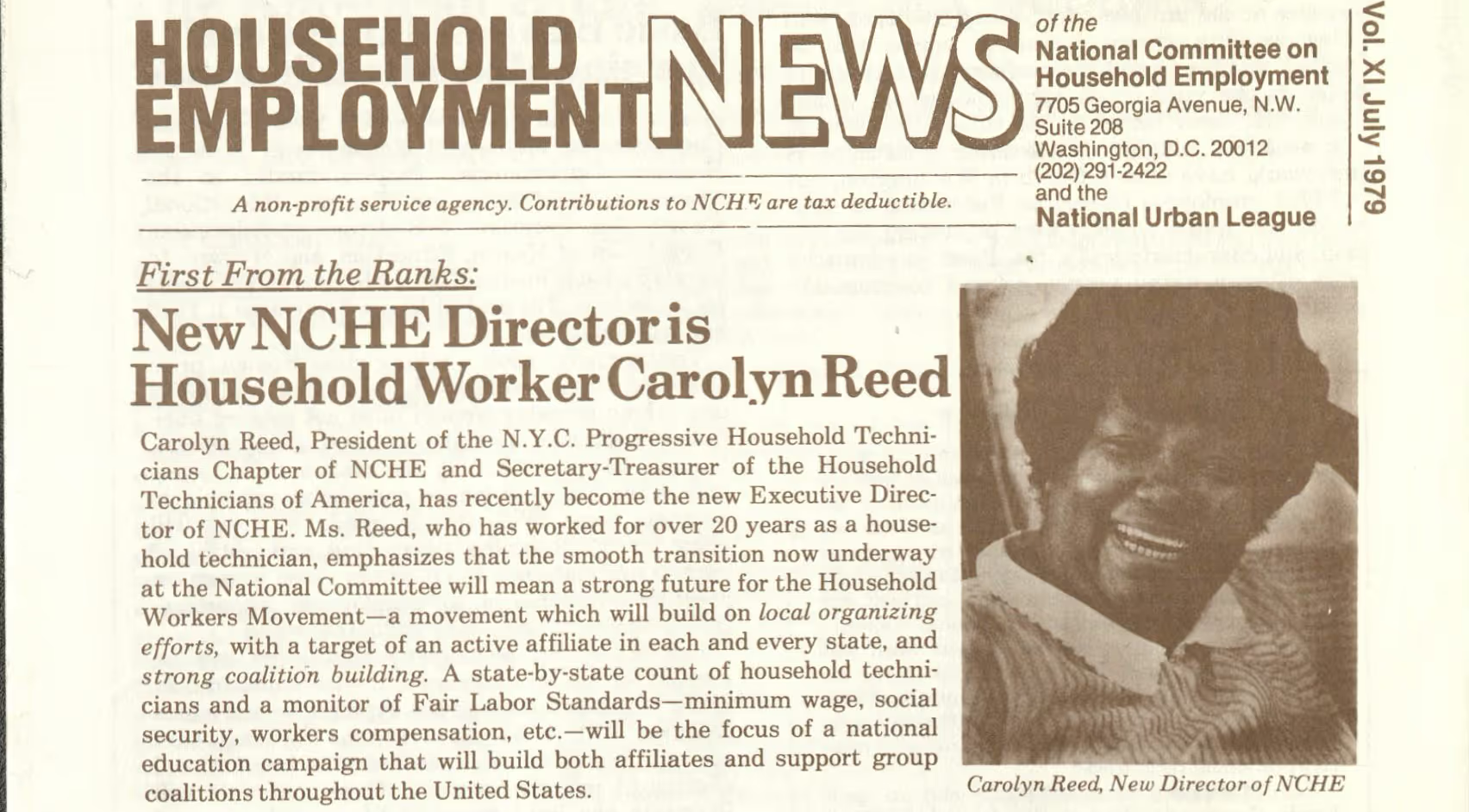
Reed launched the "Our Right to Know" project, teaching domestic workers their own history so they could feel empowered to negotiate. She believed that you cannot fight for a fair contract if you don't believe your work has value.
2026: The State of the Industry
As we mark this centennial, the domestic work industry sits at a complex intersection. On one hand, we see the rise of the six-figure nanny —highly educated and experienced career nannies who are treated as respected, essential family partners. This professionalization is a direct victory of the movement.
However, the state of the industry in 2026 remains fragmented. Reports from late 2025 indicate that for the broader domestic workforce — particularly those outside the high-net-worth sector — economic insecurity and mental health struggles are still prevalent. And while the FLSA was amended to protect professions with historically higher numbers of Black professionals, like many of our country’s laws, domestic workers who are not paid legally often miss the mandated benefits (like worker’s compensation, unemployment, and commitment to overtime and minimum wage standards) that come along with it. The gap between the professionalized sector and the unregulated market is real. Even within the agency side of our industry, there are still agencies in the US that tolerate at best and encourage at worst private employers who do not comply with best practices, legal pay minimums, placing domestic workers in jeopardy and families who rely on us for education and support in legally unsafe situations.
This reality drives two distinct forms of action for us today:
The External Fight: We Dream in Black
The torch for legislative change is carried by the National Domestic Workers Alliance (NDWA) and their We Dream in Black initiative. Leaders like Jenn Stowe (Executive Director of NDWA) are fighting for a just care economy and a National Domestic Workers Bill of Rights. They remind us that until every domestic worker has a contract and safety, the work isn't done.
The Internal Work: Our Community Advisory Committee
At Adventure Nannies, we know we cannot just point to external advocates; we must be accountable ourselves. That is why we rely on our Community Advisory Committee (CAC).
Composed of seasoned career nannies, newborn care specialists, and educators from diverse backgrounds, the CAC acts as our internal compass. They review our scholarship processes for Nanny Camp, provide critical feedback on our internal policies, and ensure that we are actually listening to the community we serve. They keep us honest, helping us ensure that our "high standards" are equitable standards.
Our Commitment: Elevating the Industry
Ultimately, our alignment with this history isn't about ticking boxes. It is about a singular goal: Elevating the industry for everyone.
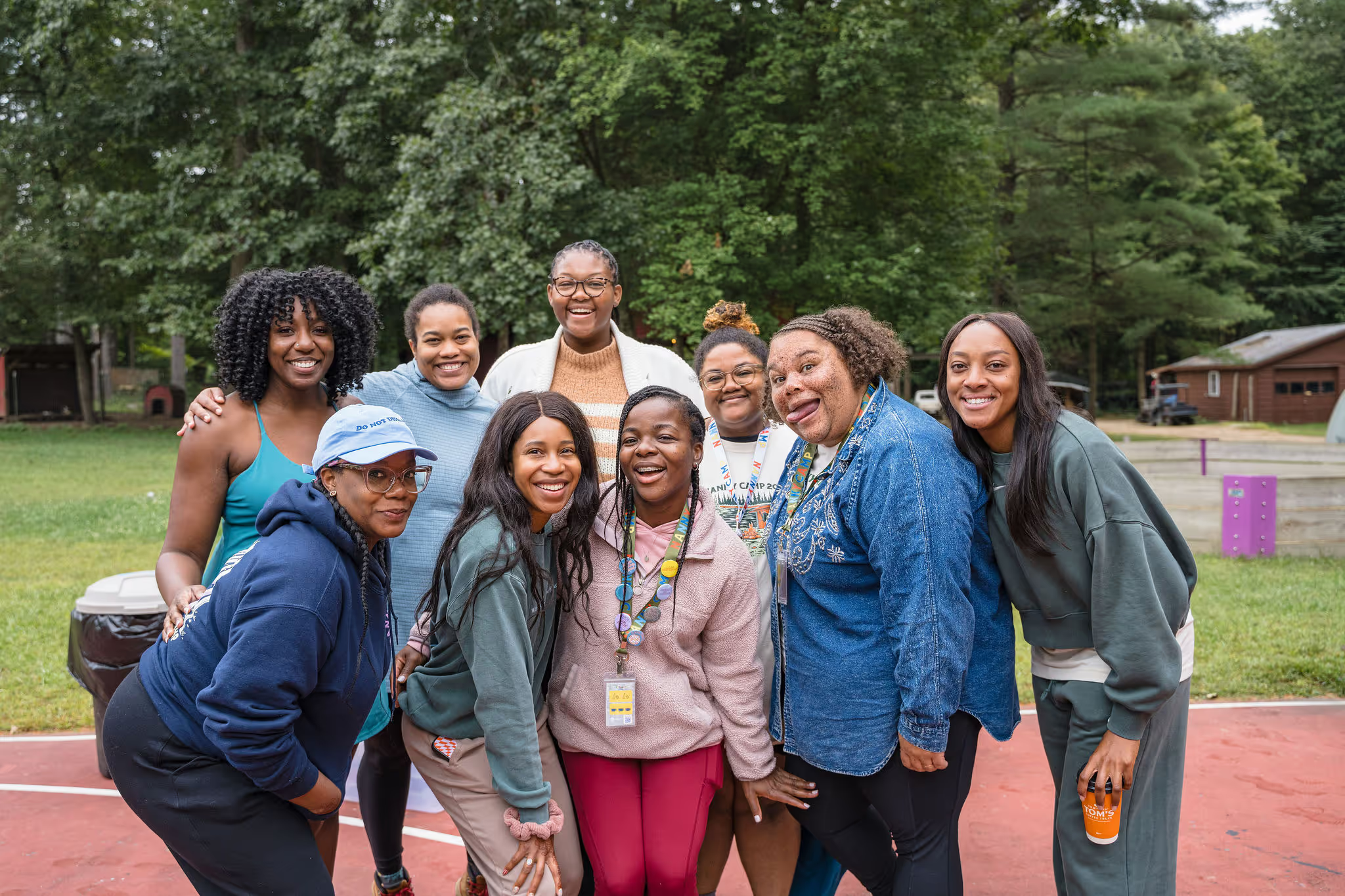
We believe that nannying is a profession, not a "side hustle" or a "favor." Our mission is to connect candidates with great jobs—not just positions that pay the bills, but roles where you are:
- Respected as a Professional: where your expertise in child development is deferred to and valued.
- Paid What You Are Worth: where W-2s, overtime, and living wages are the baseline, not the exception.
- Trusted and Celebrated: where you are hired for who you are—your unique background, your adventurous spirit, and your individual brilliance.
When we advocate for these standards, we are honoring the 100-year fight of the women who came before us. We are making sure that the title "Household Technician" or "Adventure Nanny" carries the weight and respect it has always deserved.
Resources for Learning & Action
Primary Sources & Organizations
- The Association for the Study of African American Life and History (ASALH): Read about the 2026 theme, "A Century of Black History Commemorations." asalh.org
- We Dream in Black (NDWA): Follow the modern movement led by Black domestic workers fighting for dignity and a new Bill of Rights. domesticworkers.org/we-dream-in-black
- Household Workers Unite: By Premilla Nadasen. The definitive history book on the domestic worker movement of the 20th century.
For Your Nanny Family Library (2026 Picks)
.jpeg)