The word nanny carries more than two centuries of history, and what got packed into it along the way still shapes who gets hired for this work, what they get paid, and how seriously the profession is taken.
We think about language a lot at Adventure Nannies. Words do real work: they shape how families see the professionals they hire and how those professionals see themselves. In an industry that has spent decades fighting to be treated as a real career rather than a placeholder job or a domestic favor, the words we choose matter.
The question of what to call a male caregiver has sat in the industry's back pocket for decades, usually handled with a portmanteau and a shrug. This post is our attempt to engage with it honestly. We want to trace where the word nanny came from, look at what the word manny does in practice, and lay out what a more inclusive and professional naming standard could look like.
Where the Word Nanny Came From
Most professional titles describe a function. Doctor comes from the Latin word for teacher, and plumber comes from the Latin word for lead. Nanny is different because it describes a relationship, and that framing has shaped the profession ever since.
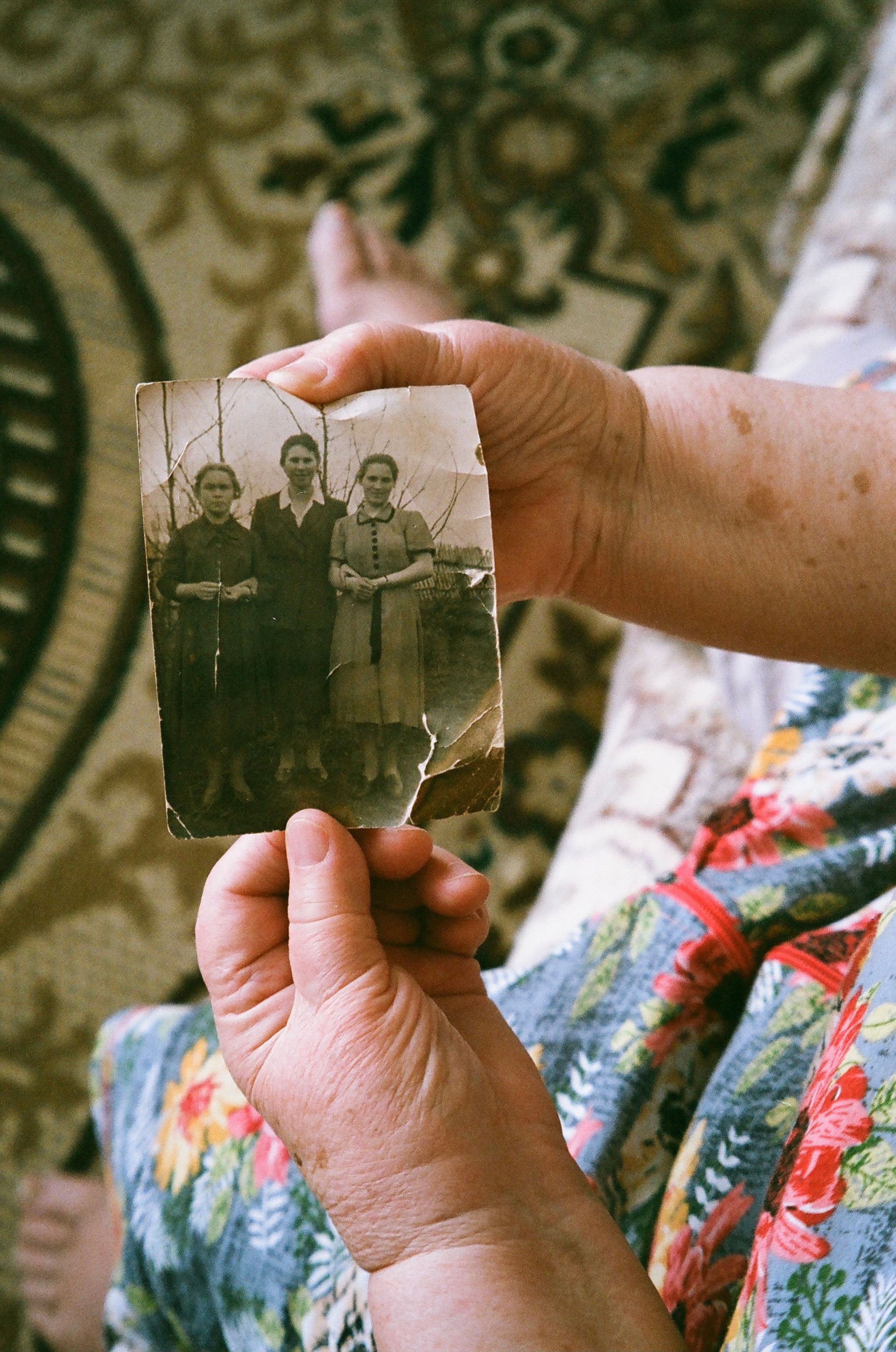
Linguists trace three converging origins for the word. The first is kinship. Nanny is linked to the Greek nanna, meaning aunt, and the Welsh nain, meaning grandmother. That family framing casts the caregiver as a surrogate relative, and for centuries it was used to justify low wages and informal arrangements. If the work is family, the thinking went, it does not need a contract.
The second origin, and the most likely one, is a name. Nanny began as a pet name for Ann, one of the most common names among working-class women in domestic service in 17th and 18th century England. Over time, the name of the woman holding the baby became the title for the job itself, and the Oxford English Dictionary records the first use of nanny as a job title in 1785. Linguists see this pattern most often in low-status roles, where individual workers become interchangeable with their function.
The third is baby talk. Na-na is one of the first sounds an infant can make, which means the title may have been given by the child rather than the employer. By that account, the job title grew out of the nursery instead of the workplace.
For most of the 1800s, nanny and nurse named the same job. In a British household, the senior childcare employee answered to "Nurse," and the young servant who carried coal and laundry up to the nursery was the nursemaid. The two words began to separate late in the century, as nursing and childcare were both trying to professionalize. Florence Nightingale's training school opened at St Thomas' Hospital in 1860, and within a few decades hospital nursing had formal training, registers, and then laws. North Carolina passed the first US nurse registration law in 1903, and Britain created a national register in 1919. Childcare made its own push. Emily Ward founded the Norland Institute in London in 1892 to train caregivers in child development, and its graduates were explicitly not servants. They were still called Norland nurses. Only nursing came out of that period with a protected title. Nurse became a legal credential. Nanny kept the domestic, informal associations that nurse had shed, along with the old assumption that caring for children is something women just know how to do. The profession is still pushing against that gap in standing.
A Lesson From Governor and Governess
To understand why the word manny exists, it helps to look at what happened when English assigned two words to the same root concept based on gender.
Governor and governess both come from the Latin gubernator, meaning steersman or pilot, and their paths could not have turned out more differently. Governor kept its connection to authority and public power. Governess narrowed to mean a woman employed to teach children in a private household, one of the most ambiguous social positions in Victorian life. She was too educated to be a servant, too employed to be family, and too female to hold real authority.
The Victorian governess taught piano, French, and embroidery to prepare girls for domestic life, while the male tutor prepared boys for the public sphere. The same root word produced two completely different levels of status.
That history built the foundation of the modern industry. When men began entering childcare in meaningful numbers in the late 20th century, they stepped into a professional vocabulary built entirely around female domesticity. The word manny was the industry's attempt to patch that mismatch.

What the Word Manny Actually Does
Manny is a blend of man and nanny. It is also, whether anyone intended it or not, a distancing move.
Linguists describe words as marked or unmarked. The unmarked word is the default, the one that needs no qualifier, while the marked word signals an exception. For most of English professional history, male was the default: author, doctor, pilot. Women entering those fields were marked with suffixes like authoress and actress.
Women then spent decades shedding those suffixes to claim equal standing. Authoress became author, and actress is increasingly just actor. The movement went toward the neutral word, because neutral meant equal.
In female-dominated fields like childcare, the dynamic flips. Nanny is the default, and a man entering the field becomes the exception. Instead of moving toward the neutral term, which would simply be nanny, the culture invented a new gendered word going the other direction. Women entering male fields claimed the neutral title, while men entering female fields received a brand-new one that kept them at arm's length from the female default. That asymmetry deserves a hard look.
The word manny announces that the person doing this job is a man, not a woman. It creates distance from the feminized associations of nanny, and in doing so it quietly confirms that those associations are something to escape. That becomes a real problem when the goal is professionalizing the field for everyone.

The pay difference it creates
There is a concrete consequence to this distancing. Sociologist Christine Williams coined the term glass escalator to describe the invisible advantages that move men in female-dominated fields toward higher pay and status, the inverse of the glass ceiling women hit in male-dominated fields.
In childcare, the manny label activates that escalator, but unevenly. In the ultra-high-net-worth market, male caregivers are often marketed as a specialty and can command higher hourly rates than female nannies with equivalent experience and credentials. In more general positions, those same men frequently earn less and struggle for access to strong placements. The higher rate, where it exists, reflects the marketing rather than the work.
Part of the gap comes from how candidates get described. Male caregivers tend to receive action words like leadership, coaching, and mentorship, while female caregivers receive relational ones like nurturing, warmth, and love. One framing sounds specialized and justifies a higher rate. The other sounds natural and does not.
This framing limits men as much as it shortchanges women. It implies a male caregiver can only justify his presence in a home through activity and mentorship, never through genuine nurturing. That reads like a compliment and works like a constraint.
Who the escalator doesn't lift
The escalator's benefits are not distributed evenly. Research on care work and nursing shows the advantages flow mainly to white men. Men of color in care roles are more often channeled toward lower-wage direct care positions and less often cast as the collegiate, athletic “big brother” that the higher-paying manny market is built around. The word carries its own gatekeeping.
Non-binary and gender-nonconforming caregivers get hit hardest here, and it is worth being precise about why. The word nanny on its own carries no gender. The binary appears only when manny enters the vocabulary: suddenly caregivers are sorted into two boxes, and anyone who fits neither is left without a word at all. That silence tells them, before they ever apply, that the industry has not made room.
Drop the second word and the problem dissolves. When everyone doing this work is simply a nanny, there is no binary to fall outside of. Nobody is the exception, nobody needs a qualifier, and the title describes the work rather than the gender of the person doing it.
What This Looks Like From Inside the Profession
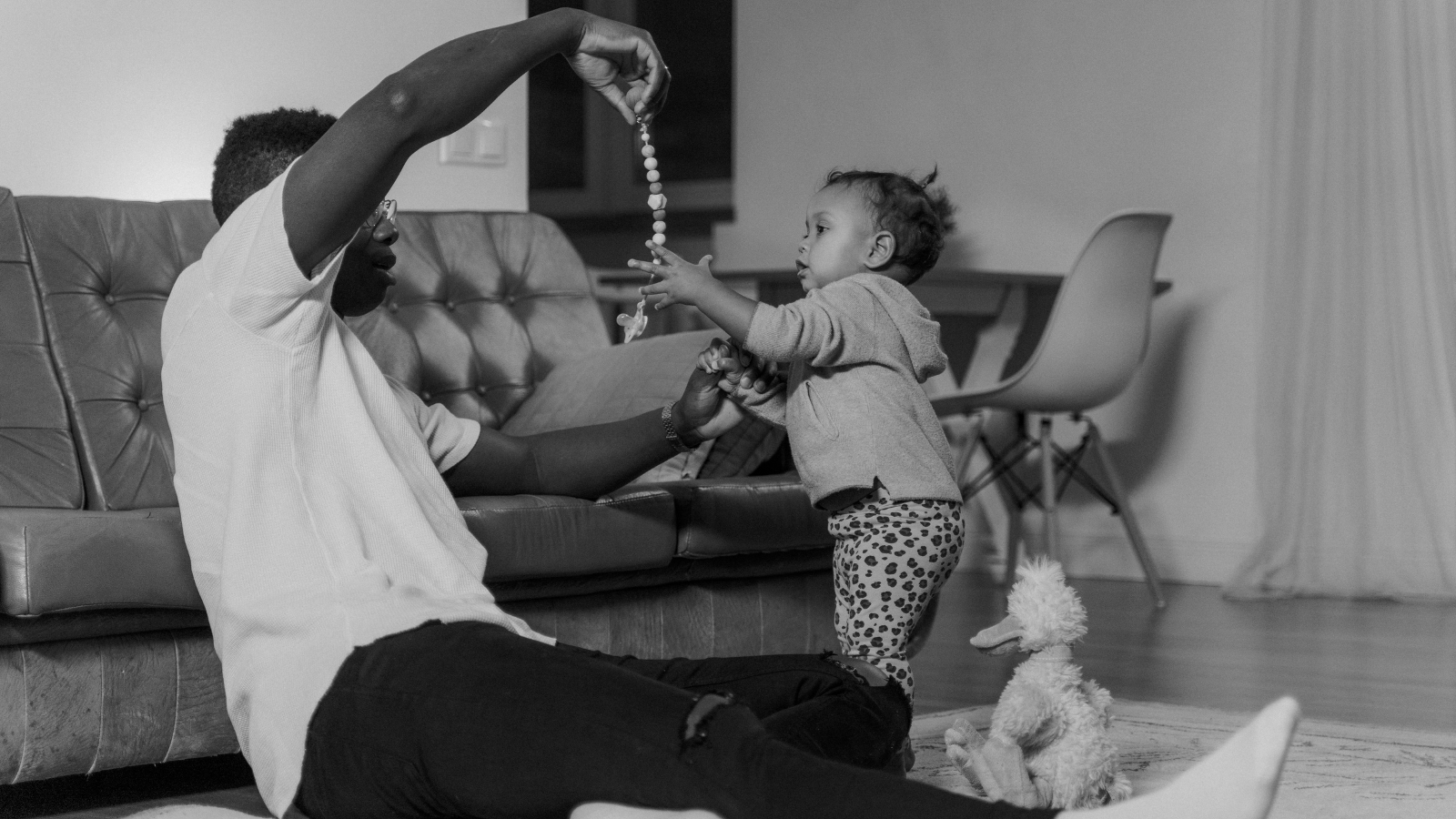
The linguistics matter because of what they do to real careers. Male nannies in our community, and in conversations we have had across the industry, describe a version of this job that most families never see.
It usually starts well. A family wants an energetic caregiver for school-age kids, someone who fits the big brother picture, and a male nanny gets the role. The trouble comes later. Families hiring for infants and toddlers rarely consider men, no matter how strong their qualifications and references are, so male nannies get funneled into a narrow band of ages and roles. When their charges grow up, or when they themselves age out of the big brother archetype, many struggle to be seriously considered at all.
The isolation compounds it. Most male nannies can count their male peers in this profession on one hand. Some are advised, even by people who respect their work, to build skills that will let them move into other areas of private service before the door closes. Men who love this career, and who are proud to call themselves nannies, end up hedging against a future the industry has quietly told them not to count on.
That is the real cost of the separation branding. A word that looks like a harmless nickname sorts people into archetypes, and the archetypes decide who gets hired, for which children, and for how long.
What We Think Should Happen Instead
We're not here to tell you the word manny is offensive or that using it makes you a bad person. Language evolves in context, and this particular word emerged from a genuine gap in professional vocabulary. Our critique is aimed at the structure, not at the people navigating it. We do think the industry is ready for a cleaner standard, though, and here is what that looks like in practice.
Treat nanny as the gender-neutral title it already is
The word doctor is not inherently male, and the word teacher is not inherently female. Nanny can work the same way, as a professional title that describes a function rather than a demographic. That requires agencies, families, and candidates to use it that way consistently. A man who cares for children is a nanny, and that sentence is not a downgrade.
When families want specific skills, name the skills
Sometimes what a family means by manny is an athletic caregiver, or someone with coaching energy and high physical engagement. Those are legitimate and specific requests, and they should be written as legitimate and specific job descriptions: athlete nanny, high-energy nanny, sports-forward nanny. Naming the skill instead of the gender widens the qualified candidate pool, focuses the search on what the family actually needs, and opens those roles to candidates of every gender who bring exactly that energy.
Audit the language in your placement materials
If your marketing consistently describes female candidates as nurturing and warm while describing male candidates as leaders and mentors, that framing is driving pay expectations whether you intend it to or not. The words signal value. Skill-based language applied consistently across all candidates is the more honest and more equitable approach.

Stop making job posts asking to hire a manny
Advertising specifically for a manny is a gender specification in a role where gender is rarely a bona fide occupational qualification under EEOC guidelines, and it narrows a search for no good reason. When a family has a specific need, an ethical agency helps them describe that need in a way that opens the right doors rather than closing others.
Why This Is Worth Saying Out Loud
Nannying is one of the most important and most undervalued professions in the country. The people doing this work, regardless of gender, are shaping how children understand the world, how they feel about themselves, and how they relate to the adults around them. That work deserves a title that holds its weight.
As a Certified B Corporation, we treat the way we use language as a business practice. We can't advocate for nanny professionalization while using a term that treats the job title as something a man needs rescuing from, and we can't talk about pay equity while ignoring the role that gendered marketing plays in creating the gap.
The path toward a more equitable, more professional, and more inclusive industry runs directly through the words we choose. Nanny is a good word with history, warmth, and weight, and it doesn't need a gendered qualifier. A caregiver who is skilled, professional, and committed to the children in their care is a nanny, full stop.
If you're a journalist, researcher, or fellow agency interested in talking through these questions, we'd love to connect. Reach out at marketing@adventurenannies.com. And if you're a nanny or educator looking to build a career with an agency that thinks this way about the work, visit our candidate resources.