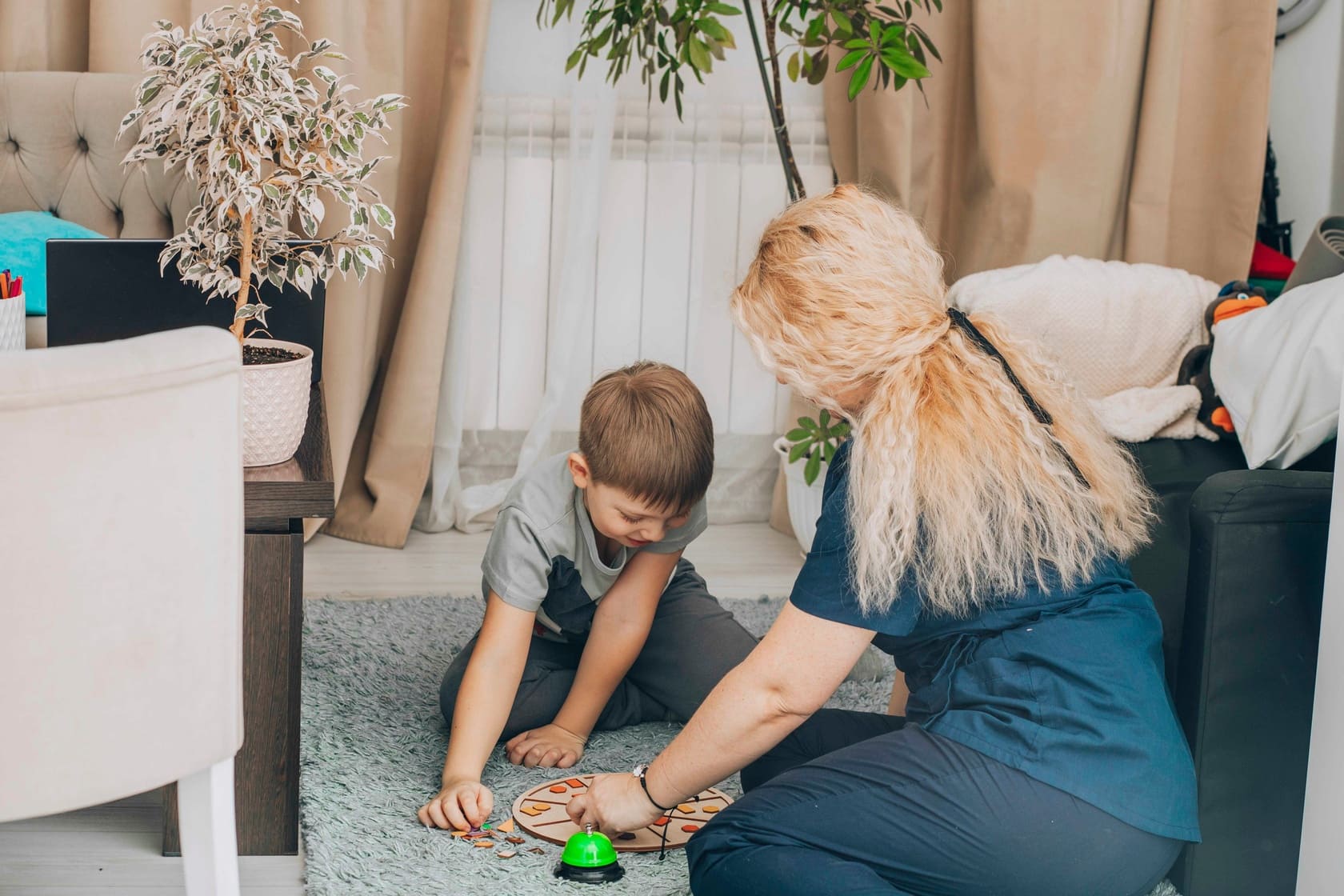
ROTA work is widely considered the major leagues of nannying — and for good reason. Here’s what it actually takes to get there.
You’ve seen the job postings: competitive compensation well into six figures, full benefits, and a schedule built around 7–14 days on followed by equal time completely off. It sounds incredible. And it can be — but it’s also one of the most demanding professional roles in the industry.
Rotational care is not a slightly more intense nanny job. It is a fundamentally different professional context, one that requires a specific mindset, a diverse skill set, and a level of professionalism that extends well beyond traditional nannying — including professionalism with the co-nanny you’ll be sharing the role with. If you’ve been staring at those job descriptions feeling stuck in the “need experience to get the job, need the job to get experience” loop, this is for you. We’ve mapped out a real roadmap: what the role actually requires, how to build toward it strategically, and how to present yourself honestly and competitively to the families and agencies doing this kind of placement.

Step 1: Understand What This Role Actually Is
Before you update your resume, it’s worth being honest about what ROTA work demands — because the candidates who thrive are the ones who understood the role clearly from the beginning.
A ROTA team is typically two nannies rotating on a set schedule — often 7 days on, 7 days off, or 14 and 14. During your rotation, you are fully on: available up to 24 hours a day, managing the children’s lives with the same level of care and consistency as if you were the only person in the role. Because from the children’s perspective, you are.
.jpeg)
That continuity is the whole point — and it’s also the hardest part. You’re not performing a job. You’re operating as part of a two-person system designed to give children uninterrupted, high-quality care across an indefinite stretch of time. That means:
- Your routines need to be documented and transferable, not held in your head
- Your handoff to your co-nanny is a professional handoff, not just a text
- Your ego is subordinated to the system, not the other way around
- Your personal standards and your co-nanny’s standards need to produce the same experience for the children
The candidates who approach this as “a great nanny job with a wild schedule” tend to struggle. The ones who approach it as “a logistics and operations role where the work happens to be childcare” tend to thrive. The shift in framing is not superficial — it changes how you prepare, how you present yourself, and how you function in the role.
What families at this level are actually looking for
Families hiring for ROTA roles are not just looking for a caregiver with a flexible schedule. They’re looking for someone who can manage a complex, dynamic household infrastructure with professionalism, composure, and genuine warmth — over long rotations, across travel, and in conditions that can change without notice. That combination is specific. It’s also genuinely rare.
The skills that make someone excellent in a standard nanny role — warmth, patience, creativity in the day-to-day — are still necessary. They’re just not sufficient. The additional layer is operational: standardization, documentation, logistics, cross-functional communication with the household team, and the ability to stay grounded when things go sideways.
Step 2: Master the Co-Nanny Relationship
Here is something that doesn’t show up in most job descriptions but makes or breaks more ROTA placements than almost anything else: your relationship with your co-nanny.
In a rotational role, you are not just an individual hired by a family. You are one half of a partnership, and the quality of that partnership directly shapes the children’s experience, the family’s peace of mind, and your own longevity in the role. We’ve seen genuinely talented nannies struggle in ROTA placements — not because of how they cared for the children, but because of how they communicated, or failed to communicate, with the person they were rotating with.
This is worth being direct about. Recently we’ve seen a handful of situations where the childcare was excellent but the communication between co-nannies was not: handoffs that left out critical information, frustrations aired unprofessionally, small misalignments that were allowed to grow into resentment rather than addressed early and respectfully. In every case, the children and the family felt it — because a ROTA team that isn’t communicating well cannot deliver the seamless continuity that is the entire reason the family hired a team in the first place.
If you want to thrive in rotational work, treat your co-nanny relationship with the same professionalism you bring to your relationship with the family. That means:

Communicate like colleagues, not roommates venting
Your co-nanny is a professional peer, and your communication should reflect that — even when you’re frustrated, even when you disagree, even when you’re exhausted at the end of a long rotation. Venting about your co-nanny to the family, to other nannies, or on social media is never appropriate. If there’s a problem, the professional move is to address it directly and respectfully with the person involved, and to loop in the family or agency only if it can’t be resolved between you.
Make your handoffs thorough and consistent
The handoff between rotations is the single most important professional moment in ROTA work. Your co-nanny is stepping into a week of the children’s lives and needs to know everything: where routines stand, what happened developmentally or medically, what the family’s preferences have been that week, what’s coming up on the calendar, what’s unresolved. A rushed or incomplete handoff doesn’t just inconvenience your co-nanny — it disrupts the children’s continuity and undermines the whole system. Shared logs, detailed notes, and a genuine handoff conversation are not optional. They’re the job.
Align on standards before small differences become big ones
You and your co-nanny will not naturally do everything the same way. That’s normal. The professionalism is in proactively aligning — on routines, discipline approaches, screen time, meal structure, communication style with the family — so the children experience consistency regardless of who is on. When you notice a difference, raise it early, kindly, and with curiosity rather than judgment. The goal is a unified experience for the children, not winning a disagreement about whose method is better.
Assume good intent and protect the partnership
Long rotations are tiring, and tired people misread tone, take shortcuts, and let small grievances accumulate. The strongest ROTA teams operate from a baseline of assumed good intent — giving each other grace, addressing issues before they fester, and recognizing that you are on the same side. Families notice when a ROTA team genuinely respects and supports each other, and they notice the opposite even faster. Protecting that partnership is part of protecting the placement.
If you can demonstrate — in an interview, in references, in how you talk about past team experiences — that you understand co-nanny professionalism at this level, you immediately stand out. Families have often been burned by team friction before. Showing them you take the partnership as seriously as the childcare is genuinely reassuring.

Step 3: Build the Skill Set That Separates ROTA Candidates
Basic childcare experience is the floor. To be genuinely competitive for ROTA positions, you need to stack specialized credentials that solve specific problems for the families hiring at this level. Here are the certifications and skills that move the needle most.
Wilderness First Responder (WFR)
Current CPR is the baseline. A Wilderness First Responder certification is a meaningful differentiator for families who ski, hike, own ranches, or spend extended time in remote locations. It demonstrates that you can manage a medical situation when the nearest hospital is hours away — and it signals the kind of composure under pressure that families at this level are actively looking for.
Water Safety Instructor (WSI) or Lifeguard Certification
Many ROTA roles involve summer homes with pools, lake houses, or time on the water. Being a strong swimmer is good. Being a certified water rescuer is hireable. This credential shifts your role from passively supervising water activities to actively ensuring safety — a very different value proposition.
Child Passenger Safety Technician (CPST)
Car seat safety is one of the most anxiety-producing responsibilities for parents. Becoming a CPST means you are the authority in any vehicle, in any configuration, with any age of child — especially for families with multiple vehicles, frequent travel, or rental cars. The confidence this demonstrates is genuinely valued.
Newborn Care Specialist (NCS) Training
Even when the children you’d be caring for aren’t newborns, NCS training signals something important: that you understand infant and child development at a biological level, not just an intuitive one. CACHE-accredited courses are a strong benchmark. This credential speaks to families who want to know you understand the science behind sleep, feeding, and development — not just the practice.

RIE® Foundations or Montessori Workshop
These philosophies are popular with the families who hire ROTA teams because they signal an intentional approach to a child’s development. Even a foundational workshop demonstrates that you think about childhood as something to design for, not just manage.
Defensive Driving
You will almost certainly be driving high-end vehicles with the most important people in the family’s lives. A defensive driving certificate offers genuine peace of mind and communicates that you understand the weight of that responsibility.
Nutrition and Allergen Awareness
In households where allergies can be life-or-death, managing them is not optional. EpiPen training, anaphylaxis response protocols, and a real understanding of cross-contamination risks are practical skills that demonstrate vigilance. Pair this with a basic culinary course — families appreciate a nanny who can prepare more than basic meals, and teaching children to cook turns a daily task into a rich learning experience.
Step 4: Develop the Soft Skills That Actually Close the Offer
Certifications get you the interview. Emotional intelligence gets you the offer — and keeps you employed through a long rotation. When you’re living and working in someone else’s home for 7–14 days at a stretch, your ability to navigate the human dynamics of that environment is not a soft skill. It’s the hardest skill.

Be the thermostat, not the thermometer
A thermometer reflects whatever temperature the room is running at. A thermostat sets it. In a ROTA role, travel plans change, flights get canceled, toddlers have meltdowns in airports, and routines get disrupted without warning. The nannies who are consistently re-hired and recommended are the ones who bring calm into those moments — who regulate the energy of the room rather than adding to the chaos. This quality is visible in an interview. Practice it there too.
The low-footprint presence
During a working trial and throughout the placement, families are evaluating more than your work with the children. They’re evaluating what it feels like to live with you. ROTA work requires a heightened awareness of shared space: your personal belongings in communal areas, your timing in the kitchen, your instinct to give the family private moments without being asked. The goal is to be a warm, capable, fully engaged presence — and to leave absolutely no trace when the family needs the space to themselves.
Reading when to fade
The most advanced version of reading the room is knowing when not to be in it. Family dinners, quiet evenings, spontaneous private moments — these are not occasions to demonstrate your engagement. The best ROTA nannies have a nearly intuitive sense of when to step in and when to quietly step out. Privacy is not incidental to these families — it’s one of the things they’re working hardest to protect. Your ability to honor that without being told will take you far.
Step 5: Build ROTA Experience Strategically
Not having ROTA on your resume yet is not a barrier — if you approach your current experience with intention. There are specific ways to build toward it.
Travel nannying as a bridge
Travel nannying is the closest functional equivalent to ROTA work. The 24/7 proximity, the hotel-room sleep management, the flexibility across time zones and disrupted schedules — all of it translates directly. Seek out travel opportunities with your current family, or take on temporary travel contracts. When you describe these on your resume, don’t just list them — describe the schedule and what it required. A family reading your resume should be able to visualize what you managed.
Proposing a pilot rotational structure
If you’re already working close to 50–60 hours a week and “time off” has started to feel theoretical, you may be closer to ROTA experience than you realize — and your family may benefit from the structure as much as you would.
Proposing a rotational model means suggesting a co-nanny to share the load, with each of you taking defined on and off periods. For the family, this means rested, consistent, long-tenured care. For you, it means genuine recovery time and legitimate ROTA experience you can document. It won’t make sense for every family or every schedule, but if the demand is already there, this conversation is worth having.
Translating transferable experience
Professional experience outside childcare is not a gap in your background. It’s often an asset. Former teachers bring curriculum fluency, developmental knowledge, and parent communication skills that families at this level genuinely value. Former nurses bring the stamina, clinical composure, and grace-under-pressure that 12-hour shifts produce. Former camp counselors bring creative energy and group leadership skills that keep a long rotation running smoothly. If you have a previous career, lead with what it taught you — don’t bury it.

Step 6: Show Up Ready — and Represent Yourself Honestly
ROTA positions are among the most competitive placements in private household staffing. The compensation reflects that, and so do the standards. Here’s what “ready” actually looks like before you apply — starting with one of the most common and most damaging mistakes we see candidates make.
Represent your true ROTA experience accurately
This one matters enough to lead with. We regularly see candidates list “rotational” or “ROTA” experience on their resumes — and then, in conversation, it becomes clear the position was actually a standard schedule with extended hours, not a true rotational structure. A live-in role with long weeks is not the same as a rotational role. A 50- or 60-hour-a-week position with occasional travel is not ROTA. A schedule where you were the sole nanny working heavy hours is not a rotation, no matter how demanding it was.
True ROTA work has a specific definition: two (or more) caregivers rotating on defined on-and-off cycles — for example, 7 days on followed by 7 days off — sharing one role with a co-nanny so the children receive continuous care. If your experience doesn’t fit that structure, calling it “rotational” on your resume isn’t a shortcut to a ROTA role. It’s a credibility problem waiting to surface.
Here’s why it matters so much. When a family or agency discovers that your stated ROTA experience doesn’t hold up under a few questions, the damage isn’t limited to that one line on your resume. It calls everything else into question. In a field built entirely on trust — where families are handing you their children, their home, and their privacy — a single inaccuracy can end a candidacy on the spot.
And the good news is you don’t need to inflate anything. If you’ve done genuinely relevant work — travel nannying, long live-in stretches, sole-charge roles with heavy hours — describe it accurately and let it speak for itself. “Sole-charge nanny working extended live-in weeks, including frequent international travel” is honest, specific, and genuinely impressive. It demonstrates the stamina and adaptability ROTA families are looking for without misrepresenting the structure. Accurate framing of real experience will always serve you better than a label that doesn’t survive the first interview.

Your resume needs to speak the language of the role
Shift the framing from reactive duties to proactive management. “Watched the kids” becomes “managed daily schedules, logistics, and activity planning for children ages X–Y.” Use accurate keywords that reflect your real experience to signal that you understand how this work is framed at the family and agency level. Format matters: a disorganized resume communicates disorganized work. Make it clean, consistent, and error-free.
Your digital presence needs to match your professional presentation
Families hiring for ROTA roles are often protective of their privacy — and they will search for you. Review your social media as a protective parent would. Posts that discuss past employers, working situations, or — yes — co-nannies, even vaguely, are immediate concerns. Anything inconsistent with the professionalism you present on your resume creates doubt. If there’s anything you wouldn’t want a family to see, address it before you apply.
Your logistics need to be sorted
A valid passport with at least six months of remaining validity. A clean driving record. If there’s anything on your background that requires explanation, prepare to address it directly, honestly, and early — before it surfaces through a check. Being forthcoming about a past challenge and taking ownership of it is almost always received better than having it discovered.
Be the same person in the interview that you were on paper
The fastest way to lose an opportunity is a disconnect between your resume and how you show up. If you’ve described yourself as organized, proactive, and detail-oriented, your interview should demonstrate that: clean background, solid lighting, references ready, no fumbling for basic information. Families at this level are evaluating everything. Show them the professional version of you from the first moment.
A Note on What You Deserve in This Role
As a Certified B Corporation, Adventure Nannies is committed to using business as a force for good, and in the nanny industry, that means advocating for the professionalization of the field across the board.
ROTA nannies are employees, not contractors. That means W-2 classification, overtime pay for hours beyond 40 in a workweek, written scopes of work, and employment agreements that clearly define what the role is and is not. These are legal standards that protect you, and any ROTA placement that doesn’t honor them is a placement worth scrutinizing.
The compensation at this level is real. So is the demand. You deserve a role that offers both — and that is built to be sustainable, not just impressive on paper.
The Path Forward
Breaking into rotational work is a genuine career progression — not a shortcut, and not something that happens because you applied at the right moment. It happens because you built toward it with intention: the credentials, the experience, the professional polish, and an honest understanding of what the role actually requires.
The roadmap is real. The work is worth it. And when you’re ready, the opportunities are there.
To explore current ROTA openings, visit our job board. If you’re a professional nanny ready to take the next step and want to talk through where you are in the process, reach out at info@adventurenannies.com. We’re rooting for you.