Most families put enormous care into hiring a nanny and almost none into what comes after. The references get checked, the trial week goes well, everyone exhales, and the professional development stops on day one. Nanny training for families is the piece of private childcare almost nobody plans for, and it's quietly the piece that decides how good the next three years in your home actually are.
Guest Blog - Dr. Ginny Schwager, The Formator Institute
I spent fifteen years working inside private homes as a nanny and house manager before founding The Formator Institute, where I now train and assess childcare teams for families full time. What follows is the case for treating your nanny's development as part of the job itself: what a trained caregiver actually does differently, what development looks like inside a private home, how to bring it up without making anything awkward, and what to look for in a program when your nanny is ready for one.

The Hiring Cliff
In almost every professional field, hiring someone is the beginning of their development. A new attorney gets continuing education. A new teacher gets in-service days. A new manager gets sent to leadership training within the year.
Then there's the nanny, who is often the most important hire a family ever makes and, in many homes, the only professional under the roof without one.
I call this the hiring cliff. Families climb an enormous hill to find the right person, and the moment the offer is accepted, the investment falls off a cliff. It's not neglect. It's that nobody ever told parents that caregiver development was theirs to think about. The agency found you someone wonderful, the children are happy, and the machine appears to run itself.
Here's what that misses. The cost of losing a good nanny is far larger than a placement fee. Your children lose a person they're attached to, which is a real developmental event, not just a scheduling problem. You lose years of accumulated knowledge that never made it onto paper: the exact nap architecture that took a month to build, the way your four-year-old needs transitions announced twice, which pediatric nurse line actually picks up. And then you start the hill again from the bottom.
The families who keep exceptional nannies for five and ten years are not lucky. Nearly all of them do some version of the same thing: they treat their nanny as a professional with a career, and careers grow. If you want the deeper retention picture, Adventure Nannies wrote a whole piece on how to keep your nanny long-term, and development sits right at the center of it.
What Children Actually Get From a Trained Caregiver
It's fair to ask what training buys you when your nanny is already good. The honest answer is that it changes the hours you never see.
A trained caregiver reads development accurately. Most childcare decisions are quiet judgment calls. Is this tantrum a phase that needs steadiness or a pattern that needs a plan? Is this picky eating ordinary or worth mentioning to the pediatrician? A caregiver with real developmental education makes those calls from knowledge rather than instinct, which means fewer missed flags and far fewer false alarms landing in your inbox at work.
A trained caregiver stays steady when it counts. Young children borrow the nervous systems of the adults around them. They can't regulate big feelings on their own yet, so they settle against the steadiness of whoever is nearby. Training in self-regulation and co-regulation is the difference between a caregiver who manages a meltdown and one who, over hundreds of ordinary afternoons, actually teaches a child's body what calming down feels like. The way the adults in your home respond to hard moments is the model your children internalize and carry with them.
A trained caregiver designs the day on purpose. Anyone can fill an afternoon. A professional builds one, with transitions that don't ambush a toddler, independent play that stretches attention span, and outdoor time placed where it does the most good. The difference between supervised time and developmentally rich time is invisible on any given Tuesday and enormous over a childhood.

What Professional Development Looks Like in a Private Home
Development doesn't require a corporate HR department. In a private household, it comes down to three things, and none of them is complicated.
A development line in the budget
Ask any group of career nannies how many have ever had an employer offer to pay for a course, a conference, or a certification. The hands that go up are rare, and those nannies talk about those families for years afterward. An annual professional development stipend, even a modest one, does two jobs at once. It makes your nanny better at the work, and it tells them that you see them as a professional with a future rather than a pair of hands. In an industry where the best people always have options, that message is retention.
Protected time to use it
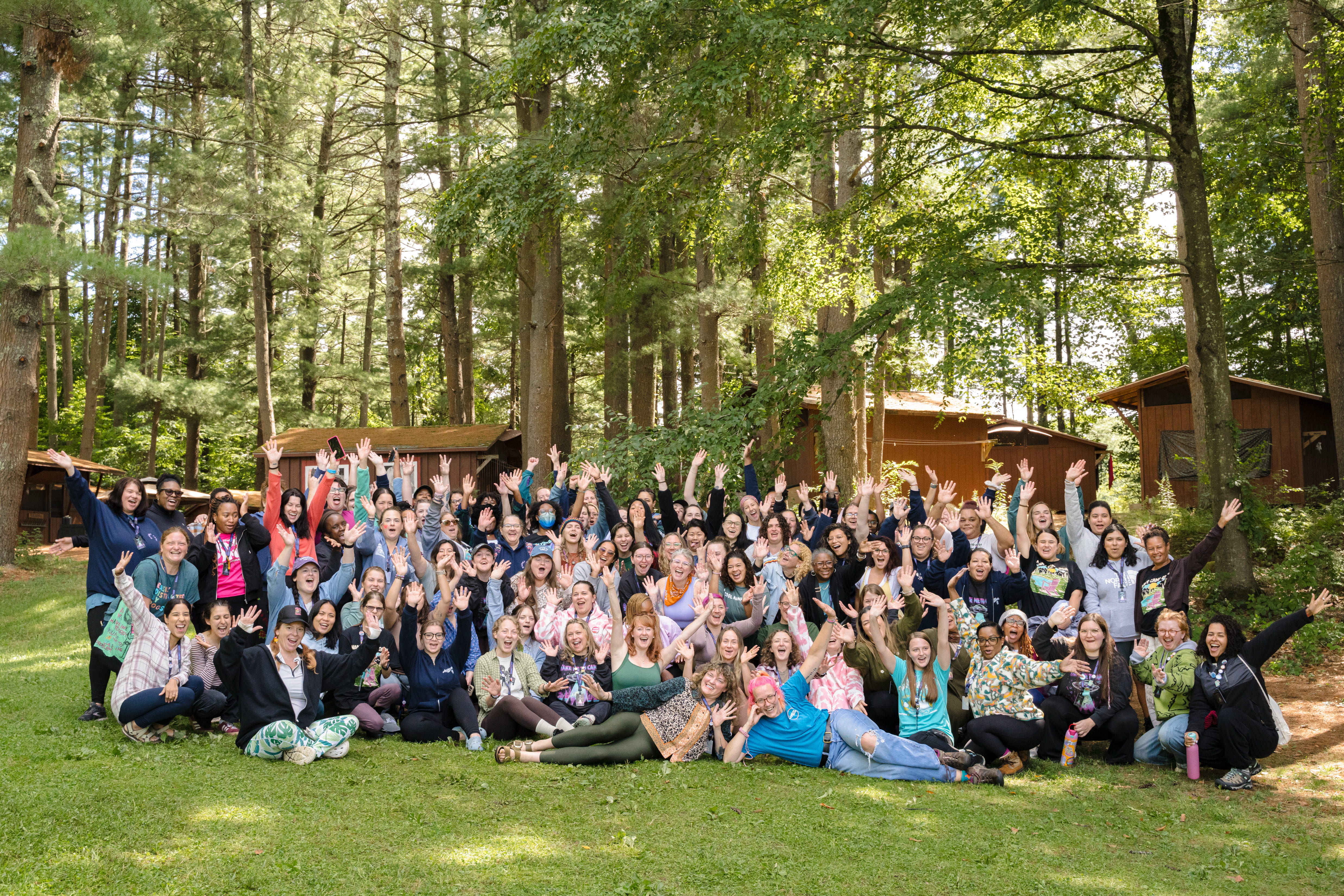
A stipend nobody can use is decoration. The second piece is a paid day or two each year for a workshop, a conference, or a course intensive, planned in advance like any other calendar item. Some of the strongest development in this field happens where nannies gather: industry conferences, training weekends, and communities like Nanny Camp, where hundreds of career nannies spend a long weekend learning from specialists and from each other. Private childcare is isolating work. One adult, one house, all day. Time spent inside a professional community sends your nanny home with new tools and, just as valuable, with colleagues.
A real credential to work toward
One-off workshops are useful. A structured certification is transformative, because it gives your nanny a professional identity and a body of knowledge instead of a collection of tips. For your family, it means the person raising your children alongside you is working from evidence-based methods rather than whatever the algorithm served up this month. For your nanny, it's a career milestone earned in your employ, which is the kind of thing that keeps someone for the long haul.

How to Bring It Up Without Making It Weird
Parents sometimes worry that offering training implies criticism, as if the subtext is that the current work isn't good enough. In fifteen years, I haven't seen it received that way. What your nanny hears is that you noticed they're a professional.
The easiest moments to raise it are the ones already built into the relationship. At hiring, add a development stipend and a paid training day to the working agreement, right alongside guaranteed hours and paid time off. At the annual review, ask a single question: "Is there any training or professional community you'd like us to invest in this year?" If the working agreement is already signed and the review is months away, it works as a standalone conversation too. Few sentences land better in this profession than "we'd like to pay for you to grow."
Then let them choose the direction. A caregiver who picks their own development follows through on it, and they usually know better than anyone where their next edge is: infant sleep, school-age executive function, managing a multi-caregiver schedule, or their own resilience in a demanding job.

What to Look For in a Training Program
Not all training is built for your situation, and this is where a little discernment protects your investment. Four things worth checking before you fund a program:
Built for private homes, not adapted from daycare. Group childcare training assumes ratios, coworkers, and an institutional setting. Your nanny works alone, inside your family's actual life, often across travel and multiple properties. Look for programs written specifically for the private household reality.
Real credentials behind the curriculum. Anyone can sell a course. Ask who wrote the material and what their education in child development actually is. Evidence-based means the methods trace back to research, not to a popular feed.
Ongoing rather than one weekend. Skills built over weeks, with practice between sessions, outlast anything absorbed in a single sitting. The best programs also connect graduates to a continuing professional community.
Respect for the nanny as a professional. The right program treats your nanny as a career practitioner developing a craft. If the marketing talks down to them, the curriculum probably does too.
This gap between what career nannies do and the training available to them is why I founded The Formator Institute, the only credentialed, systems-based institution purpose-built for private household childcare. Whatever program your family chooses, the standard above is the one worth holding it to.
The Long Game
Your nanny's development is one of the few investments in your household that pays everyone at once. Your children get a caregiver who grows more skilled every year they're together. Your nanny gets a career instead of a job, in a home that treats them like the professional they are. And you get the thing every parent actually wants from childcare, which is the same trusted person at the door for years, getting better the whole time.
If you're at the beginning of this, finding the right person to invest in, that search is exactly what Adventure Nannies does best. And if you already have someone wonderful, the next step costs one conversation: ask them where they'd like to grow, and offer to fund it.