
A long-term nanny placement is a multi-year hire where one caregiver stays with a family through significant stretches of a child’s development. The families whose placements actually last are the ones who treat it as a fundamentally different decision from a short-term hire, from the very first conversation.
Most families do not set out looking for a long-term placement. They set out looking for a nanny, get a few months in, and realize something quietly important: they do not want to do this search again next year. They want the person who is already part of the household, the one who knows the morning routine and which kid needs a snack before homework, to simply stay.
That is the moment a hire becomes a long-term decision, and it is also the moment most families get stuck, because they keep searching the same way they always have. Résumé, availability, hourly rate, start date. Those things matter, but they are the criteria for hiring someone for the next eight months, not for hiring someone your children will grow up alongside. The skills that make a nanny good right now and the qualities that make a placement survive three or five years are not the same list.
This guide walks through what a long-term nanny placement actually is, who it is the right call for, how it compares to the other ways families hire, and what genuinely makes one last over the years.

What a Long-Term Nanny Placement Actually Is
A long-term nanny placement is a hire measured in years rather than months. In practice, it usually means a commitment of at least a year, and often a multi-year relationship in which one caregiver is a constant through significant developmental stretches of childhood, whether that is toddlerhood into early school years or grade school into the start of adolescence.
The defining feature of a long-term placement is that the role itself evolves, not simply that the contract runs longer. The job that fits a two-year-old (naps, safety, sensory play) is not the job that fits a seven-year-old (homework, activities, social coaching, more independence). A long-term nanny is hired to grow with your children and to be steady while everything around them changes, which is a fundamentally different mandate than doing one fixed job well.
That is also why long-term placement is the format underneath most of what busy households actually need. Live-in and live-out roles, roles with regular travel, and roles that include education at home are all specific expressions of the long-term structure. The multi-year foundation comes first, and the specifics get layered on top.
Who a Long-Term Placement Is For (and Who It Is Not For)
Long-term placement is not automatically the right call, and a good agency will tell you so. It works best when your need is genuinely stable, meaning your work, your family size, and your location are not about to change in a way that would reshape childcare entirely. It also works best when continuity matters to you, meaning you would rather your children have one trusted adult across many years than a rotation of capable strangers. It is particularly valuable for households with complexity such as frequent travel, demanding or unpredictable schedules, or high-profile circumstances where trust takes a long time to build and is expensive to rebuild.
Long-term placement is the wrong fit when the underlying need is short or uncertain. If you are covering a parental leave, bridging a season, or you suspect your situation will look very different in six months, a temporary or short-term placement is the more honest choice. Forcing a long-term frame onto a short-term need tends to end with an early and awkward exit for everyone involved. Knowing which one you actually need is worth getting right before a search begins, rather than halfway through it.
Long-Term vs. the Other Ways to Hire
Families weighing a long-term placement are usually choosing between three paths. Here is how they compare.
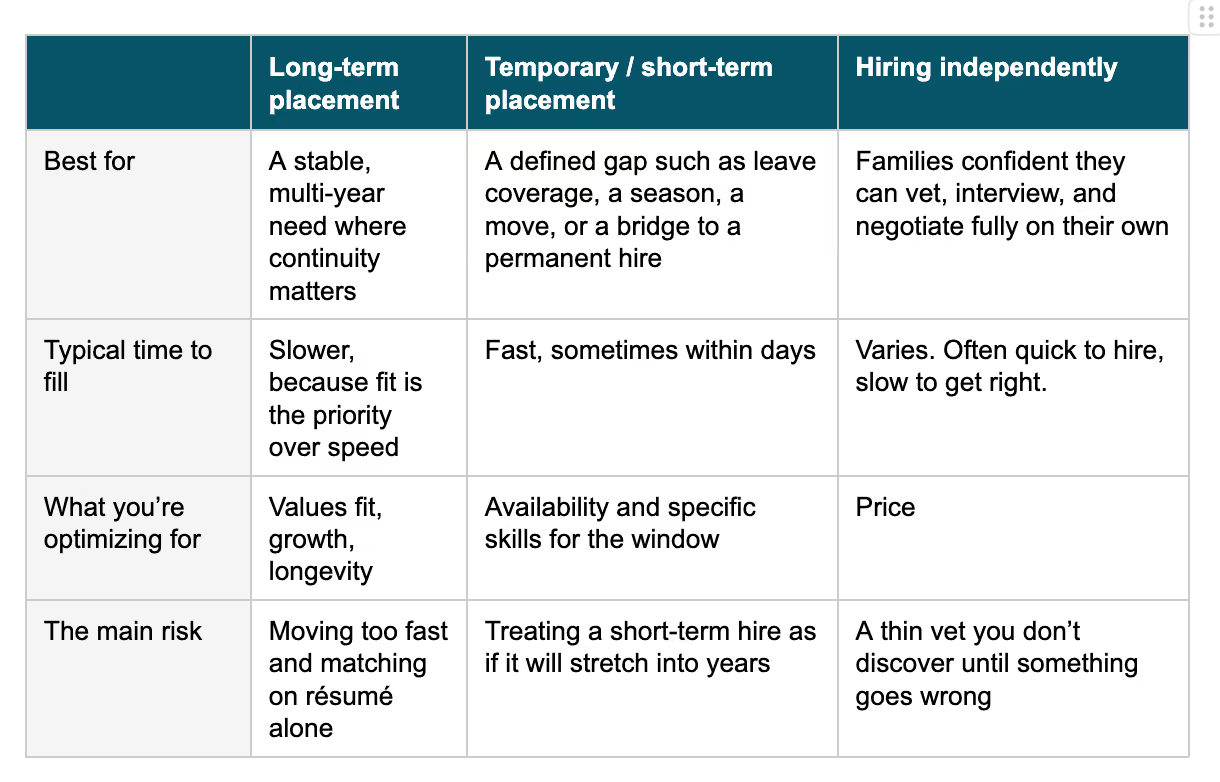
What Actually Makes a Long-Term Match Last
Long-term placements rarely fall apart over a lack of skill. They fall apart over the things that only show up with time, and the families whose placements hold for years tend to do a specific set of things well from the beginning.

Values alignment matters more than the résumé
Over the course of five years, a nanny and a family will navigate hundreds of small judgment calls about screen time, discipline, food, how to handle a hard day, and how much independence to give. A résumé tells you what someone can do, but it tells you almost nothing about whether they will make those calls the way you would. The long-term matches that hold are the ones where the family screened for values and parenting philosophy as deliberately as they screened for experience.
Put the role in writing and revisit it
Every long-term placement should start with a real work agreement covering scope, hours, responsibilities, compensation, time off, and travel expectations. This matters not because anyone expects conflict, but because roles drift over time. The job quietly expands, resentment builds, and no one ever says the thing out loud until someone is already halfway out the door. The families who do this well treat the agreement as a living document and revisit it on a set schedule, running an annual review of both the role and the compensation. That practice keeps small mismatches from becoming the reason a great nanny leaves.
Pay to retain, not just to hire
Undercompensation is one of the most common reasons strong long-term nannies leave good families, and the industry does not always say that plainly. A rate that was fair at hire is no longer fair three years later if it never moved. Long-term retention means thinking about raises, paid time off, and benefits as part of the deal from the beginning rather than as something you will figure out if the question comes up. The cost of a thoughtful compensation structure is almost always lower than the cost of starting a new search from scratch.

Hire someone who wants the longevity too
A placement lasts when both sides want it to, and a candidate who is quietly treating the role as a stepping stone is not a long-term match no matter how impressive the interview. Longevity is something you can screen for directly, by asking candidates about their previous placements, why they left, and what kind of role they are looking to stay in for the long haul. The strongest long-term matches happen when the candidate is as invested in the multi-year arc as the family is.
When the Role Includes Education
For many families, a long-term nanny is also an educator. As children grow, the role increasingly includes homework partnership, in-home tutoring and childcare folded into one trusted relationship, or the daily, curiosity-driven enrichment that turns an ordinary afternoon into something meaningful.
It is worth knowing the distinction between the two most common educational versions of this role. An educational enrichment nanny brings real intention to a child’s development, offering reading pitched to where the child actually is, projects that follow their interests, and consistent, hands-on child development support woven through everyday life. A private educator is a different and more specialized hire, meaning a candidate with classroom teaching experience or curriculum design experience, best suited to families who are homeschooling, roadschooling, or who want structured academics delivered at home. Some long-term placements need one version of this role and some need the other, and some evolve from the first into the second as children grow. Naming which one your family wants early in the process makes the search far more precise.

When the Role Includes Travel
Plenty of long-term placements are not homebound. If your household moves regularly for work, for seasons, or simply because you would rather see the world together, a long-term nanny often travels with you, which adds a real layer to the fit question.
Travel asks for things a home-based role does not: managing time zones with kids, packing and gear logistics, being genuinely good company on a long flight, and holding a routine steady in an unfamiliar place. A nanny who is excellent at home is not automatically excellent on the road. If travel is part of your life, it belongs in the conversation from the very first day of the search rather than as a surprise sprung on a placement six months in.
How a Long-Term Search Actually Works
A strong long-term search runs in a specific order, and the order matters. It starts with getting genuinely clear on the family: your children, your schedule, your travel, your non-negotiables, and the harder-to-name things like the energy you want in your home. Only then does the candidate side of the search begin. The goal is not to hand a family a stack of profiles to sort through but to present a short, considered slate of people who are real fits, each with the context for why they made it in front of you. A long-term search does not end at the offer either. Trials, onboarding, and the early months are where a placement is actually secured, and skipping over those stages is how strong hires become early departures.
This is the part of the process Adventure Nannies is built around. We help families do the upfront thinking about what continuity, education, and travel really mean for your household before a single candidate is introduced, because a long-term match made on a clear brief is the kind that lasts. The process is slower than a quick hire on purpose. The right placement almost always is.
The Hire Worth Slowing Down For
A long-term nanny becomes one of the most consequential people in a child’s life, present in some seasons more than almost anyone outside the immediate family. Treated as a quick logistics fix, that kind of hire is a risky thing to rush. Treated as what it actually is, a multi-year relationship your children will remember, it is worth every bit of the care it takes to get right.
The real work happens before the search begins. Decide that you need continuity, get honest about whether your need is genuinely long-term, and name what fit actually means for your family. Do those three things well, and the placement itself becomes far more likely to be the last search you run for a long time.
If you're starting to think about long-term care for your family, that's exactly the conversation we love to have before a search begins. Fill out our Family Application Form and tell us a little about your household — we'll help you figure out what the right long-term match actually looks like for you. You can also reach us at hello@adventurenannies.com.
.avif)