.jpeg)
The fall equinox lands on September 22 this year, quietly marking the moment the northern hemisphere tips toward winter. For roughly 24 hours, day and night sit in near-perfect balance, then the light begins its long retreat toward the solstice. It is one of the oldest observed moments in human history, and one of the most overlooked in modern American households.
There is a real invitation in that. Unlike holidays that come freighted with expectations, gift lists, and travel logistics, the equinox is unclaimed territory. Whatever you build around it is genuinely yours, and because it returns at almost the same moment every year, it is one of the most sustainable seasonal traditions a family can start. A child who tracks shadows at age four can be running the whole ritual by age nine.
What follows are fall equinox activities for kids that go deeper than a pumpkin-spice craft. Real astronomy you can do with a stick and a driveway. Harvest festivals from five different cultures, each with a genuine way for children to take part. Seasonal rhythms that compound year after year. Whether you are a parent planning the season or a nanny or private educator shaping it on a family's behalf, every one of these works as a single afternoon or as the seed of an annual tradition.
Start With the Equinox Itself
Before the apple orchards and the leaf piles, spend twenty minutes on what the equinox actually is, because it is one of the few astronomy lessons a child can verify with their own eyes and a stick.
Track a shadow at solar noon
On the equinox, the sun rises due east and sets due west almost everywhere on Earth, and day and night come closest to equal length. Have kids mark the tip of a stick’s shadow on the driveway with chalk every hour, starting mid-morning. The shortest shadow of the day points true north (in the Northern Hemisphere), and if you repeat the exercise near the winter solstice, the difference in shadow length is dramatic enough that even preschoolers notice. Save a photo of the chalk marks each year. By the third year, you have a homemade sundial tradition and a child who understands axial tilt better than most adults.
.jpeg)
For older kids, connect the stick on your driveway to one of the most famous buildings in the world. El Castillo, the Maya pyramid at Chichen Itza, was built so precisely that on the equinoxes the afternoon sun throws a shadow down its staircase in the shape of a snake winding downward. People built monuments to this exact day more than a thousand years ago, which is a pretty good thing to know while you're standing outside with a stick.
Skip the egg-balancing myth, or better, test it
You will see claims every September that eggs balance upright only on the equinox. The honest answer is that eggs balance on any day of the year with enough patience; the equinox has no effect on gravity. For school-age kids, this is a gift: try balancing an egg on the equinox, then try again a random Tuesday in October, and let them discover the myth is a myth. Teaching a child to test a viral claim is worth more than the claim ever was.
Catch the Leaves Before They Turn
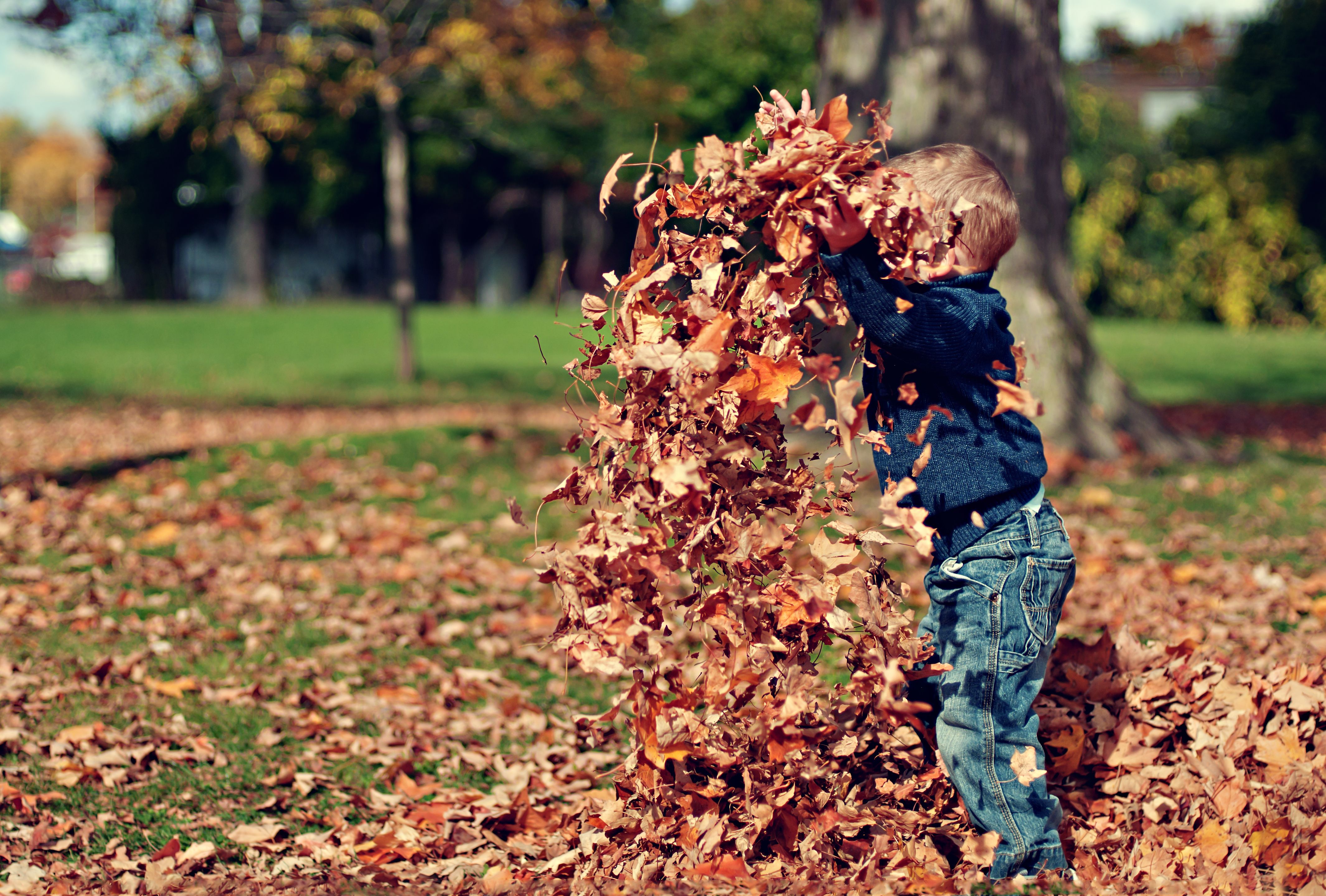
Most fall leaf activities start too late. The interesting science happens before peak color, and the equinox is the perfect trigger to begin.
Do the leaf chromatography experiment
.jpeg)
The yellows and oranges of fall are not created in autumn; they are in the leaf all summer, hidden under chlorophyll’s green. When shorter days shut chlorophyll production down, the carotenoids underneath finally show. Kids can prove this in September while the leaves are still green: tear a few leaves into a jar, cover them with rubbing alcohol, set the jar in hot water for an hour, then stand a strip of coffee filter in the liquid. The pigments climb the paper and separate into visible bands of green, yellow, and orange. A green leaf revealing its hidden autumn colors is the kind of result kids retell at dinner.
Start a phenology journal (or a phenology wheel)
Phenology is the study of when seasonal things happen: the first red maple leaf, the day the geese fly through, the last tomato on the vine. Give each child a notebook and let them log dated observations from the equinox through the solstice. Younger children can draw. Older children can write, and by year two they can compare their observations against last year's entries.
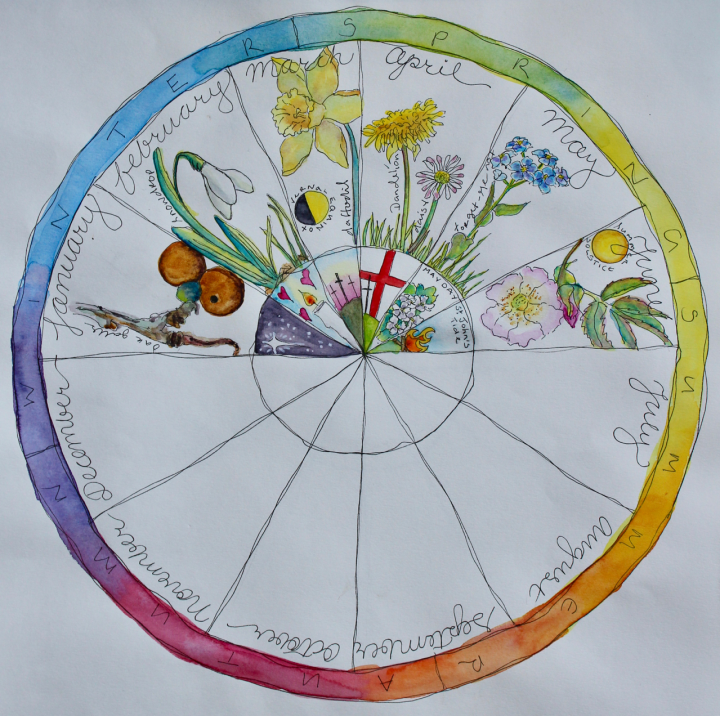
If your kids respond better to something more visual, a phenology wheel is a beautiful variation. It's a circle divided into twelve months where children add drawings and notes for what they notice each month, so a full year of the natural world ends up recorded on a single page. Raising Little Shoots has a lovely archive of examples and a downloadable Phenology Wheel Guide if you want a step-by-step to hand a caregiver or start with your own family.
For nannies and private educators, this is one of the strongest activities in the season, because it turns an ordinary daily walk into an ongoing research project and it requires nothing but attention.
Celebrate the Harvest Festivals of the World
The autumn equinox may be the most widely celebrated moment on the human calendar. Across continents and thousands of years, people have marked this same week with remarkably similar instincts: gather, share food, give thanks, honor the people who came before, and pay attention to the moon. For kids, that convergence is the lesson itself. Different cultures, same sky, same harvest, same gratitude. Here is a deeper look at five traditions worth celebrating, with a real way for children to take part in each one. This works best as genuine appreciation: learn the story, use the real names, and where you can, buy the real food from a bakery or market in that community rather than approximating everything at home.
The Mid-Autumn Festival: mooncakes and lanterns under the full moon
Celebrated across China, Vietnam (where it is called Tết Trung Thu and centers especially on children), and communities throughout East and Southeast Asia and the diaspora, the Mid-Autumn Festival falls on the fifteenth day of the eighth lunar month, when the harvest moon is at its fullest and brightest. In 2026 that is September 25, three days after the equinox. Families gather for reunion dinners, light lanterns, and share mooncakes, dense round pastries whose shape echoes the full moon and whose sharing symbolizes family completeness. The story most children learn is the legend of Chang’e, the moon goddess who drank an elixir of immortality and rose to the moon, where she lives with a jade rabbit who can be spotted in the moon’s markings on a clear night.
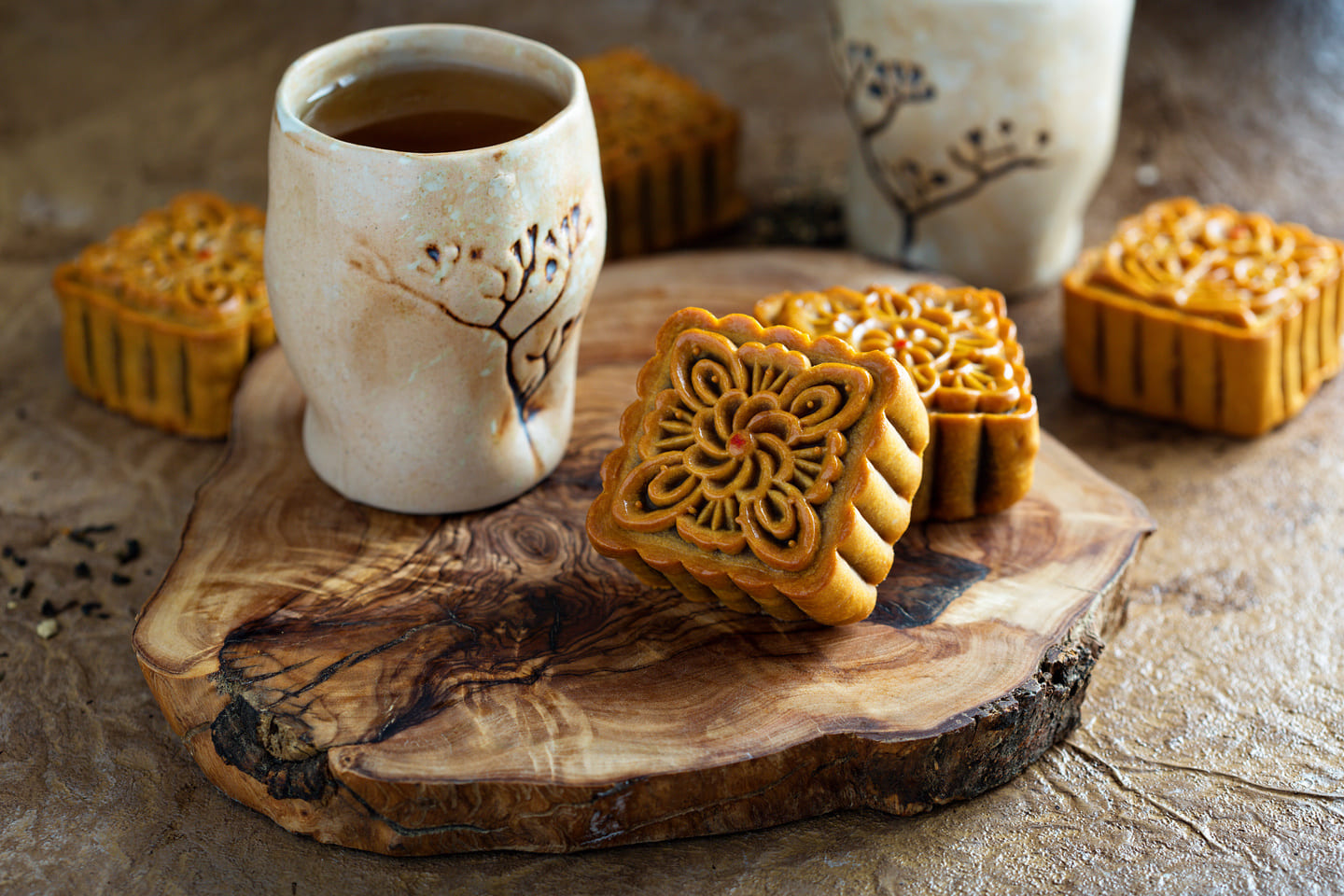
To celebrate with kids, make paper lanterns in the afternoon and then take them outside after dark on the night of the full moon to actually look for the rabbit in the moon together. Buy real mooncakes from a Chinese or Vietnamese bakery if you have one nearby. Lotus seed paste with a salted egg yolk is the classic, and cutting one into small wedges to share is part of the tradition. Kids who hear the Chang'e story before the moon viewing will stare at the moon differently for the rest of their lives.
Chuseok: Korea’s harvest thanksgiving
Chuseok, sometimes called Korean Thanksgiving, shares the same lunar date as the Mid-Autumn Festival and runs as a three-day national holiday in South Korea; in 2026 it falls on September 24 through 26. It is one of the biggest travel weeks of the Korean year, because the heart of the holiday is returning to your hometown: families honor their ancestors through a memorial rite called charye, tend family graves, and share an enormous meal. The signature food is songpyeon, small half-moon rice cakes filled with sesame, chestnut, or sweet red bean and steamed over pine needles. Tradition holds that whoever shapes the most beautiful songpyeon will have good fortune ahead, which makes it a food practically designed for small hands.
To celebrate with kids, the shaping is the activity. Songpyeon dough is simple rice flour and water, tinted naturally with ingredients like mugwort or sweet potato, and children can pinch and fill the half-moons themselves. Pair it with Chuseok's deeper theme, gratitude to elders, by having kids make or deliver something to a grandparent or older neighbor. That pairing, food plus filial gratitude, is the actual shape of the holiday, not just a craft borrowed from it.
Tsukimi and Autumnal Equinox Day: how Japan honors this exact week
Japan gives this season two distinct observances, and the difference between them is a wonderful conversation with kids. Tsukimi, literally “moon viewing,” is the harvest moon celebration: families set out displays of susuki (pampas grass) and eat tsukimi dango, small round rice dumplings stacked in a pyramid, while admiring the full moon. In Japanese tradition the moon’s markings show a rabbit pounding rice cakes, a lovely companion to China’s jade rabbit. Separately, the equinox itself is a national holiday: Autumnal Equinox Day (Shūbun no Hi), which sits at the center of a seven-day Buddhist observance called Ohigan, when families visit ancestral graves and temples. The timing is not arbitrary: because the sun sets due west on the equinox, and the Buddhist Pure Land is described as lying to the west, the equinox is considered the day the two shores are closest.
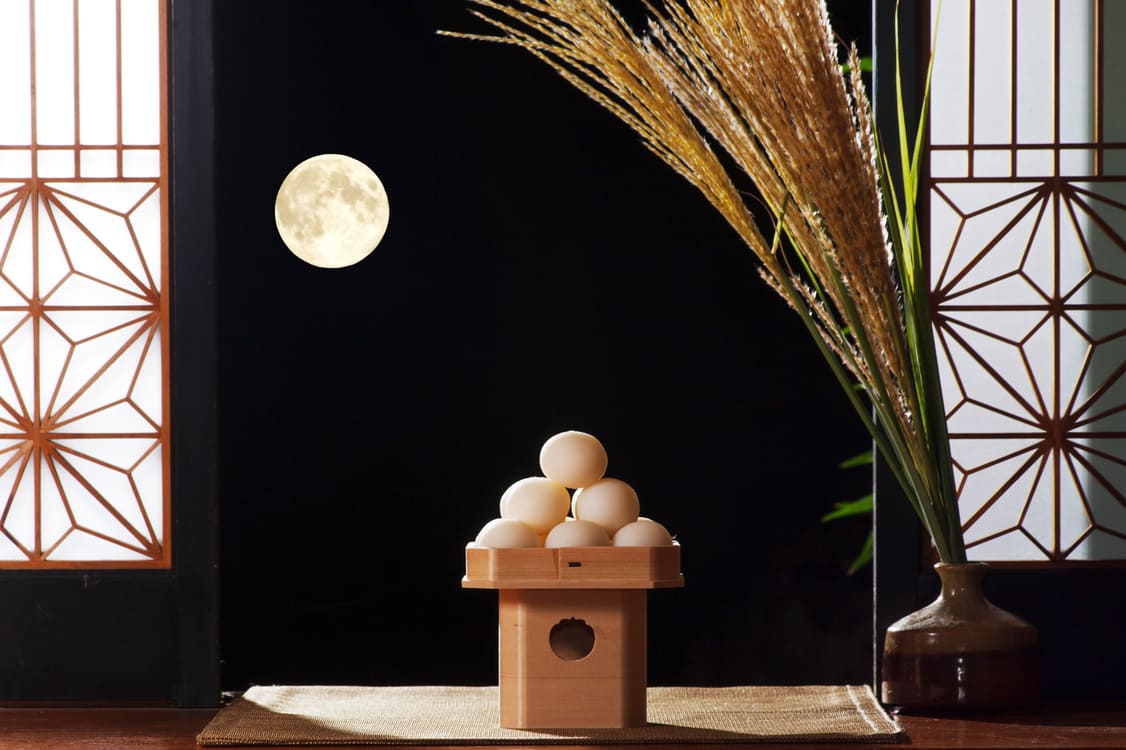
To celebrate with kids, tsukimi dango are one of the easiest traditional foods a child can make. It's sweet rice flour and water rolled into balls, boiled, and stacked. Add a stem of ornamental grass to the table, take the stack outside, and hold a proper moon viewing. For older children, the Ohigan idea of a week set aside to remember family who came before can open a genuinely meaningful conversation. Looking at photos of higanbana, the red spider lilies that bloom across Japan at exactly this time of year, makes the season visual.
Sukkot: a week of eating outside
The Jewish harvest festival of Sukkot begins on the fifteenth of the Hebrew month of Tishrei, five days after Yom Kippur. In 2026 it begins at sundown on September 25. For seven days, families build and dwell in a sukkah, a temporary outdoor hut with a roof of branches or bamboo left open enough to see the stars, commemorating the shelters the Israelites lived in during forty years in the desert. Meals move outside into the sukkah, guests are invited in nightly, and children traditionally take the lead in decorating it with hanging fruit, paper chains, and artwork. Of all the world's harvest festivals, this may be the most naturally child-centered. It is, at heart, a sanctioned week of building a fort and eating dinner in it.
To celebrate with kids, the decorating and the nightly guests are already the children's domain if your family observes Sukkot. If you're learning about it from outside the tradition, the transferable idea is strong on its own. Build a temporary outdoor shelter together, string it with lights and paper chains, and eat at least one full meal in it under the open sky. The fragility is the point. A house you build in an afternoon, that the weather can reach, teaches gratitude for the sturdy one you sleep in.
Mabon and the old European harvest home
Long before the equinox had a modern name attached to it, agricultural Europe marked this week as the harvest home. The grain was in, the community had survived another growing season, and the response was a feast, a thanksgiving, and a sharing of the surplus. Modern pagan and Wiccan traditions celebrate the equinox as Mabon, a name coined in the 1970s for practices with much older roots, and treat the day as a festival of balance and gratitude: equal light and dark, a table full of apples and squash, and a deliberate giving of thanks before the lean months. Many who celebrate Mabon mark it by donating to food banks, which connects the oldest harvest instinct, sharing the surplus, to a real modern need.
To celebrate with kids, this is the tradition that translates most directly into action. Have children help choose and shop for a food bank donation, and let them do the actual handing over. A gratitude ritual can be as simple as everyone at the dinner table naming one thing the year grew for them. If the household keeps a nature table, the equinox is its official reset day. Out with the shells and summer finds, and in with the acorns and seed pods.
Bring the Season Into the Kitchen
Apple picking is the default fall outing for a reason, but the difference between a fine trip and a great one comes down to knowing a little more than the average family showing up on a Saturday.
Pick with a purpose
Apple varieties ripen in waves, and orchards rarely advertise which ones are actually ready the week you visit. Call ahead and ask. Early-fall pickers around the equinox often catch Honeycrisp, Gala, and McIntosh at their best, while the great baking apples like Granny Smith and Northern Spy come later. If you plan to bake with kids, that matters. A pie made with fresh McIntosh collapses into sauce, while a firm variety holds its shape. Letting a child taste two varieties side by side and describe the difference is a better sensory activity than most things marketed as sensory activities.
Give kids real jobs, not pretend ones
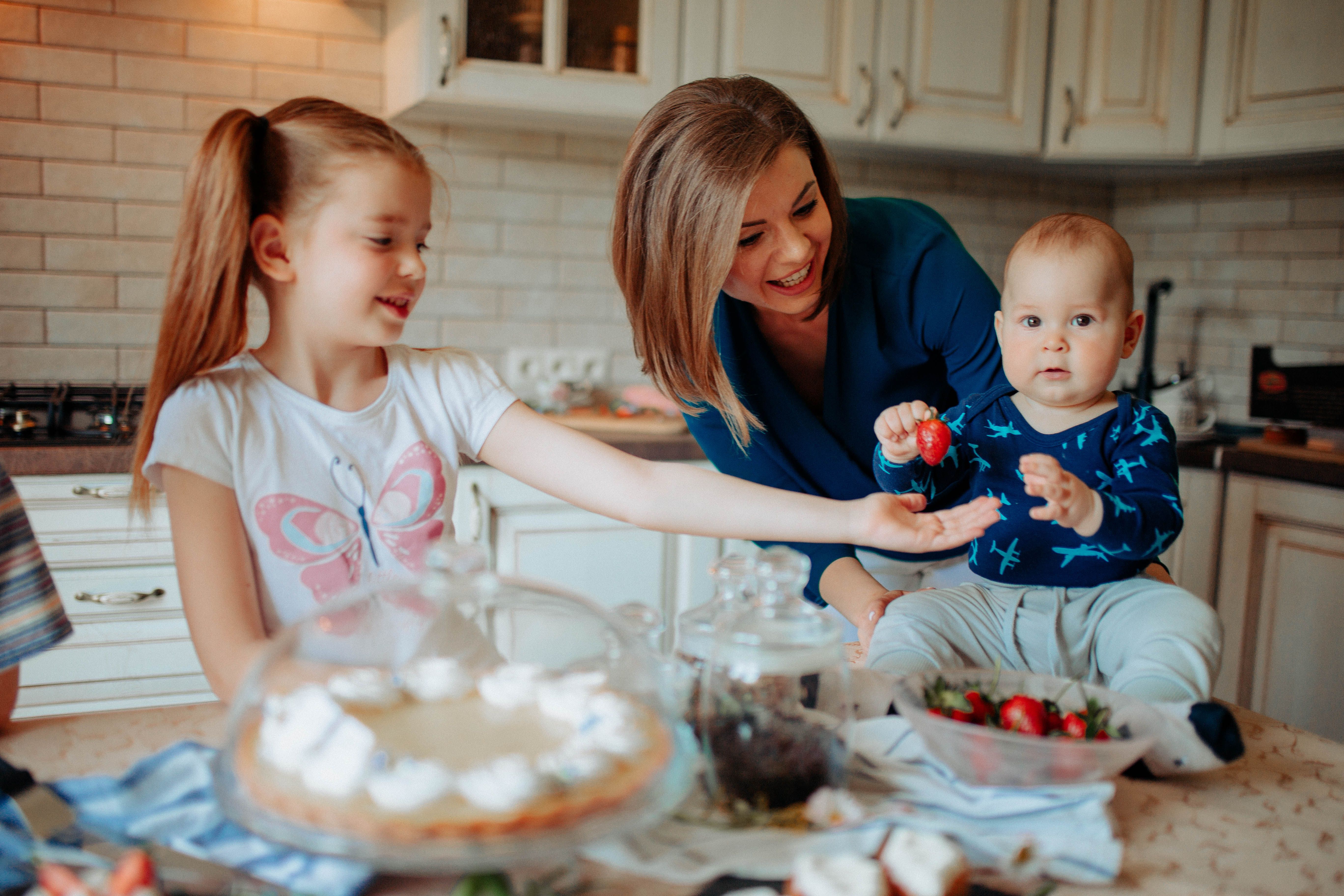
Children can tell the difference between helping and being managed. A three-year-old can wash apples, tear herbs, and mash with supervision. A five-year-old can crack eggs, measure, and operate a crank-style peeler, which is honestly the best five dollars you'll spend all season. An eight-year-old can follow a simple recipe start to finish while an adult stays nearby. The goal is a child who says "I made this" and means it. Applesauce is the perfect equinox recipe because it's nearly impossible to ruin, and the whole process from orchard to bowl fits inside one afternoon.
Build a Seasonal Rhythm, Not Just a Craft Day
One-off activities are fine, but the households where kids develop a real relationship with the seasons tend to run on rhythm. Small, repeated markers do more than single big events.
A nature table is the simplest version. Borrowed from Waldorf education, it's a small shelf or windowsill where children display what the season is offering: acorns, seed pods, a pressed leaf, a found feather. It costs nothing, changes weekly, and gives kids a reason to look down on every walk. Rotate it fully at each equinox and solstice and you'll have a year-round practice with four built-in reset days.
Golden hour is the other free resource of early fall. As the sun drops lower, the hour before sunset turns unreasonably beautiful, and it now happens at a kid-friendly time instead of 8:30 at night. A standing after-dinner walk in late September, even ten minutes long, is the kind of small ritual children remember as "what we always did in the fall" twenty years later.
Plan for the Shift Nobody Talks About: Light and Sleep
The part of the equinox that affects households whether or not anyone celebrates it is this: from now until December, most of the U.S. loses two to three minutes of daylight every single day. Kids feel this before adults do. Melatonin onset shifts with the light, early risers start waking in the dark and staying in bed longer (enjoy it), and the late-afternoon stretch gets harder as outdoor time compresses.
The practical move is to front-load light and movement earlier in the day as the season deepens. Morning outdoor time becomes more valuable than afternoon outdoor time, and the after-school window for parks and bikes shrinks week by week. Households with a nanny or educator do best when this gets talked about directly rather than absorbed as friction. The fall schedule really is different from the summer one, and pretending otherwise is how everyone ends up frustrated by mid-October. The families who do this well treat the equinox as a natural checkpoint. A short conversation about how the daily rhythm, outdoor time, and wind-down routine should shift for the darker months is something we encourage in every Adventure Nannies placement, because clear expectations are what make working relationships last through the time change and beyond.
A Day of Balance, on Purpose
The equinox is the one day the year holds still. Light and dark come in equal measure before the scale tips toward winter, and there is something honest about marking that with children. There is something even bigger in showing them how much of humanity has always marked it too. A child who has stacked tsukimi dango, pinched songpyeon, eaten dinner in a homemade hut, and looked for the rabbit in the moon has learned something no worksheet teaches, which is that people everywhere, in every era, stop at this same moment to say thank you.
None of this requires a packed itinerary. A shadow on the driveway, a jar of torn leaves, a lantern under the full moon, a pot of applesauce, or a ten-minute walk in the gold light. Pick one this year. The tradition will grow on its own.
If you're building a family life with room in it for seasons, traditions, and a caregiver who treats an afternoon like this as the real work of childhood, that is exactly the kind of match Adventure Nannies loves to make. Reach out at hello@adventurenannies.com to start the conversation. If you're a nanny, NCS, or private educator who plans days like these, visit our candidate resources at adventurenannies.com/resources/candidate-resources to learn about working with us.