
This post is for general informational purposes and reflects what we've learned placing nannies with traveling families. It is not medical advice. Always consult your pediatrician or a licensed medical professional about your child's specific health needs, medications, and dosing before you travel.
What Great Travel Nannies Actually Bring to These Moments
Competence that holds under pressure
A travel nanny’s value in a medical situation isn’t just practical — it’s also emotional. A calm, confident caregiver who assesses a situation, knows what they’re looking at, and moves toward a solution absorbs a significant amount of the stress that would otherwise fall entirely on the parents. That stress absorption is not incidental to the role. It’s one of the core reasons experienced traveling families prioritize this quality when they’re looking for a candidate.

The candidates who have this quality demonstrate it in how they talk about past situations. They describe specific experiences, their reasoning process, the outcome, and what they learned. They don’t speak in generalities about being “good in a crisis.” That’s something to probe specifically in an interview — and it’s one of the things we screen for deliberately in travel nanny placements.
Preparation that predates the emergency
The travel nannies who handle illness situations best are the ones who thought about them before they happened. They carry a well-stocked first aid kit appropriate to the children’s ages and the destination. They know the children’s medical history, allergies, and current medications without having to look them up. They have the pediatrician’s contact information and know the protocol for reaching them across time zones.
They’ve also had the specific conversation with the family — before the trip — about what their decision-making authority is in a medical situation. A nanny who isn’t sure whether they can authorize care in an emergency loses time in exactly the moment when time matters most. That ambiguity is entirely preventable.
The First Aid Kit That Actually Travels
Most families underpack first aid for travel and over-rely on being able to source what they need at the destination. For trips with young children, a thoughtful kit is worth the space it takes:
- Infant or children’s acetaminophen and ibuprofen — confirm age-appropriate dosing before you leave and carry written dosing instructions
- Oral rehydration salts (Pedialyte packets travel better than liquid) — gastro illness is the most common pediatric travel illness and rehydration is the primary treatment
- Antihistamine appropriate for the child’s age and weight
- Any prescription medications, with a copy of the prescription and the generic name written down for international pharmacy use
- Digital thermometer — pack it, don’t assume the hotel has one
- Saline nasal spray and a nasal aspirator for younger children
- Bandages, antiseptic wipes, and medical tape that actually sticks
- The pediatrician’s after-hours number and a telehealth service your family uses

Your nanny should know where this kit is and what’s in it before you leave. Ideally, they helped you pack it.
Navigating Healthcare in Unfamiliar Places
International destinations
The research you do at home is worth more than the research you do in a foreign city with a sick child. Before any international trip, identify the nearest reputable medical facility for each destination — not just the nearest clinic, but one appropriate for the severity of illness that might arise with a child. Your hotel concierge is a useful starting point. Your travel health insurance provider can also direct you. Having this written down somewhere accessible is the preparation that matters at 2am.
Travel health insurance that covers the whole traveling party — including the nanny — is non-negotiable for international travel with children. Confirm your coverage specifically includes pediatric care and medical evacuation in the countries on your itinerary. Gaps in coverage are the kind of thing you discover at the worst possible moment, so don’t wait until you’re abroad to read your policy.
Prescription medications internationally
Medications available over the counter in the US may be prescription-only elsewhere, and vice versa. Brand names differ from country to country. For any medication your child takes regularly, carry an adequate supply plus a buffer, and travel with the generic name written down. A travel nanny who speaks the local language — or who knows how to communicate effectively in a pharmacy without shared language — is more valuable than most families think about until they need it.

When to Seek Care vs. When to Wait and Watch
This is where a nanny’s actual pediatric knowledge earns its value. A fever in a healthy toddler is almost always manageable at home. A fever in an infant under three months is always an emergency. A rash that appears after starting a new food is different from a rash that appears after exposure to an unknown plant. These distinctions require real knowledge, not just calm.
A travel nanny who has worked extensively with young children, who has navigated illness in both domestic and international contexts, and who knows the difference between “monitor this” and “go now” is a fundamentally different resource than a capable nanny who hasn’t built that specific experience yet. For families who travel internationally with young children, that isn’t a nice-to-have — it’s part of the qualification criteria.
The families who navigate illness on the road with composure are almost always the ones who did the preparation before they left — not the ones who figured it out on the fly.
Setting Your Nanny Up to Succeed
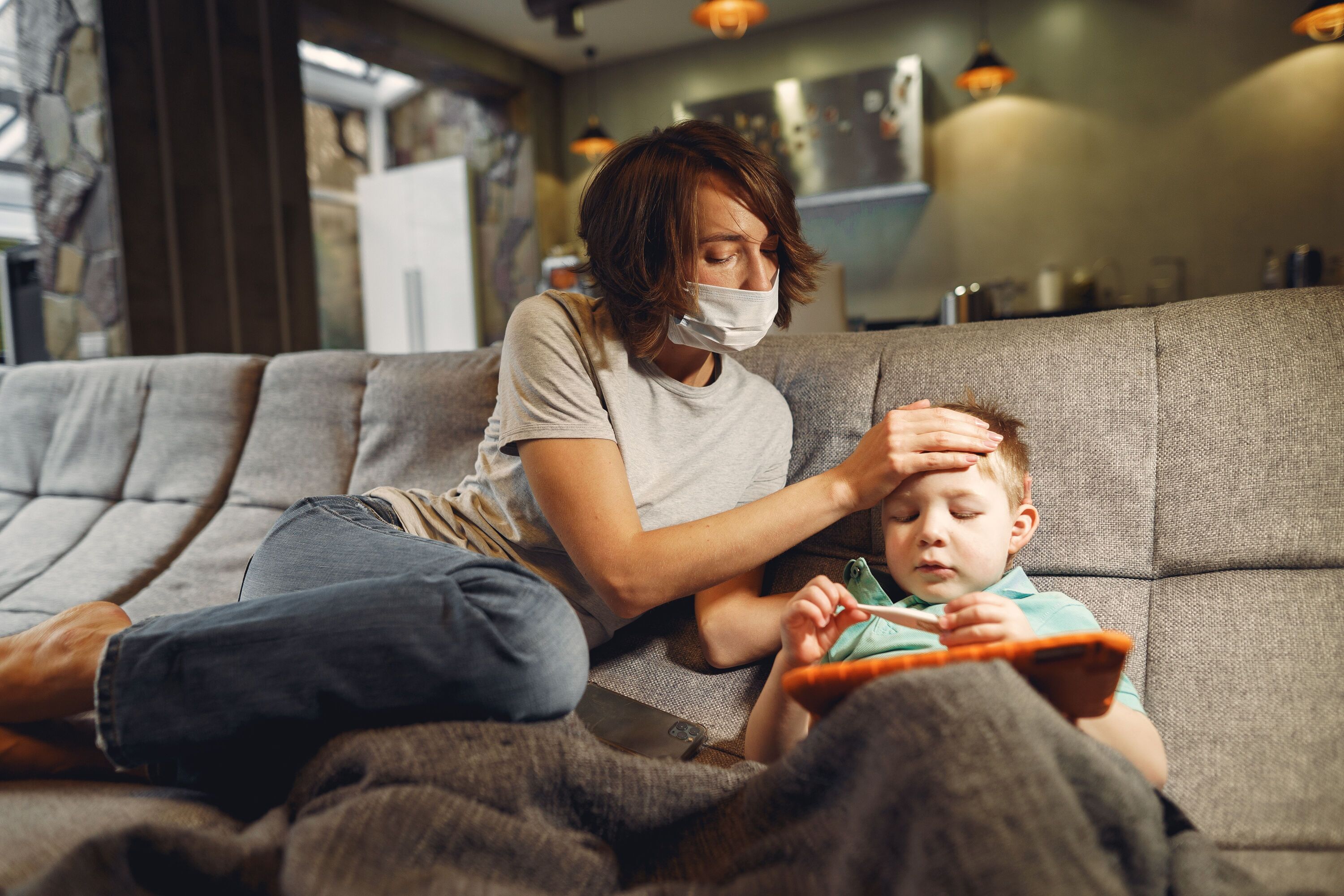
The best travel illness outcomes almost always trace back to preparation that happened before departure: documented protocols, accessible medical information, clear decision-making authority, and a nanny who was part of the planning rather than handed a situation cold.
Before any trip, make sure your nanny has:
- A complete list of the children’s medical history, allergies, and current medications
- The pediatrician’s contact information and the after-hours protocol
- Written clarity on what decisions they’re authorized to make in a medical situation
- Awareness of the nearest reputable medical facility at each destination
- Confirmation that they’re covered under your travel health insurance
- Familiarity with the first aid kit — where it is, what’s in it, and how to use it
A travel nanny who walks into a trip having had these conversations is ready to handle what comes. One who hasn’t had them is doing triage on two problems at once: the sick child and the missing information.
We help families think through this at the start of every travel placement, and the candidates we place in travel roles are evaluated for exactly this kind of competence. For details on our travel nanny placement process, visit our travel nanny services page. Or reach out directly at hello@adventurenannies.com — we’re happy to talk through what your family’s trip actually needs.
A note on medical guidance
Adventure Nannies is a nanny and household staffing placement agency. We are not medical providers, and nothing in this post should be treated as medical advice, diagnosis, or treatment guidance. The first-aid and medication suggestions here are general starting points for a conversation with your child's doctor, not recommendations for your specific child. Dosing, allergies, existing conditions, and destination-specific health risks all require input from a licensed medical professional who knows your family. Talk to your pediatrician before you travel, and in an emergency, contact local emergency services or the nearest appropriate medical facility.


.avif)