
When you’re imagining the perfect addition to your family team, it’s easy to start building a "unicorn" candidate in your mind. You want someone who is safety-conscious, creative, patient, and—while we’re at it—maybe holding a diploma from a top-tier university. It’s natural to want the absolute best for your children.
But when families ask us, "Do nannies need a college degree?", our honest answer is usually no.
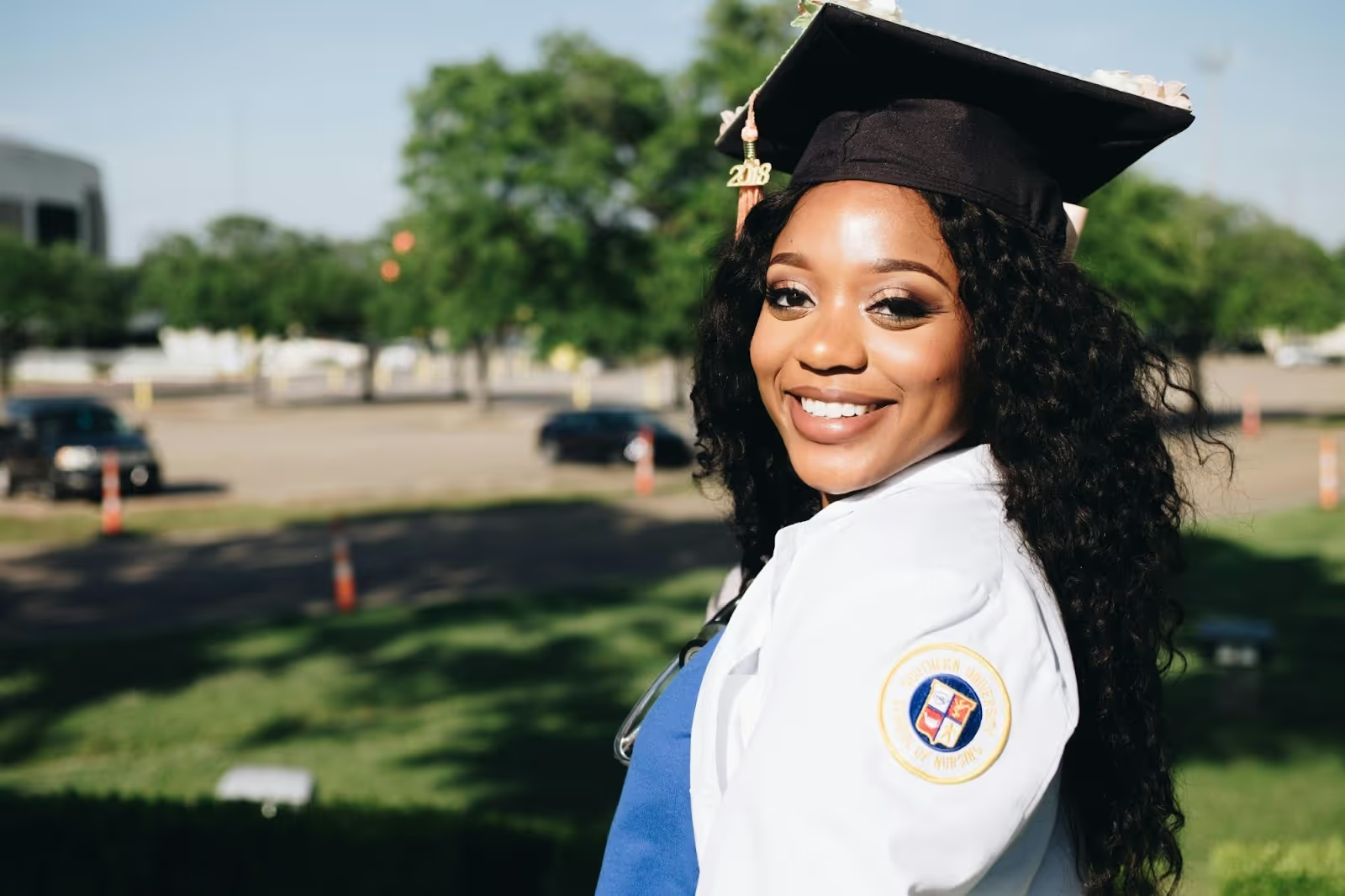
Unless you have a very specific educational goal (like full-time homeschooling), requiring a four-year degree often just means you’ll pay a premium for a qualification that doesn’t necessarily translate to better care. In fact, sticking rigidly to that requirement might mean missing out on the incredible talent pool of career nannies who have spent years mastering their craft in the real world.
At Adventure Nannies, we are a Certified B Corporation™ committed to expanding perceptions of what a nanny can be. We believe in looking at the whole person—and often, the most "educated" candidates aren't the ones with university degrees, but the ones with specialized, industry-specific training.
Why the Question Matters (and What It Costs You)

In the current childcare market, "degree inflation" is real. It’s tempting to use a Bachelor’s degree as a shortcut for vetting intelligence or professionalism. But doing so has real-world consequences for your search:
- You Pay for the Paper: Candidates with degrees in education or psychology often command significantly higher hourly rates. You are essentially paying for a qualification that might sit on a shelf while they are actually using skills they learned through hands-on experience.
- The Talent Pool Shrinks: Many of the industry’s most sought-after career nannies started working right out of high school or honed their skills in early childhood centers. By requiring a BA, you filter out seasoned pros who have 10+ years of playground-proof experience.
- Degrees Aren't Always Accessible: A four-year degree can be unattainable for many talented individuals due to prohibitive cost, logistical barriers, or personal and family situations. Valuing only this path can exclude highly capable caregivers.exclusive to those who had access to traditional higher education.
- Equity Matters: Valuing diverse pathways to professional childcare helps build a more inclusive economy—a core value of our B Corp community. Great caregiving isn't exclusive to those who had access to traditional higher education.
The Real "Higher Learning" of the Nanny Industry
Here is the mindset shift we encourage families to make: Value continuous professional development and demonstrable commitment to the field over a specific, singular degree.
Instead of demanding a specific college degree or even a single, exclusive certification, we encourage families to look for a broader demonstration of expertise and dedication. These aren't just "alternatives" to a degree; they are specialized, targeted training programs and educational backgrounds designed specifically for the work these professionals do in your home, and they all show a dedication to continuous learning.
Here’s a few things we see on resumes that show a nanny has invested in their career and takes their role seriously:
- Newborn Care Specialist (NCS): This is like a master’s class in the first few months of life. NCS professionals are trained specifically in sleep conditioning, swaddling, breastfeeding support, and infant health. If you are hiring for a newborn, this certification is far more relevant than a general education degree.
- Child-Related Education: A degree or coursework in areas like Early Childhood Education, Psychology, or Social Work can provide a valuable foundation in the science of how kids learn and grow, demonstrating a formal commitment to the field.
- Alternative Certifications and Training: Look for credentials like professional development hours, advanced training in child behavior, or other comprehensive programs that require specific coursework and a demonstrated understanding of child development and best practices. These equivalents still show dedication to education and follow-through without being overly restrictive.
- Water Safety: Essential if you have a pool or spend summers at the lake.
- Specialized Philosophies: Does your family love the Montessori or RIE® approach? Nannies can get certified in these specific philosophies, ensuring they align perfectly with your parenting style.
These educational investments show that a candidate has pursued the "higher education" that actually impacts your daily life, proving they are serious about their career and committed to providing high-quality care.
Degree vs. Experience: The Reality Check
When weighing nanny experience vs. education, ask yourself what you actually need on a chaotic Tuesday morning.
Do you need someone who can write a thesis on Piaget’s stages of development? Or do you need someone who can intuitively de-escalate a toddler tantrum in the middle of a busy grocery store because they’ve done it a hundred times before?

The Case for Experience
A nanny with years of professional childcare experience brings "muscle memory" to the job. They know how to juggle schedules, manage household logistics, and spot a safety hazard before it happens. They have practical, tested solutions for sleep regression and picky eating that you simply won't find in a textbook.
When a Degree Actually Matters

There are specific scenarios where a degree is a "must-have," but they are specialized. For example, if you need someone to facilitate full-time schooling, design a curriculum, or act as a private teacher, you are looking for a Private Educator. This is a different role than a traditional nanny, and a degree is standard here. Additionally, your state may have more specific criteria necessary for a non-parent teacher who will be coming in to design or implement a homeschool program. For almost everyone else? The degree is optional. The specific industry training is what counts.
Practical Skills to Prioritize
If you take the university degree requirement off the table, what should you focus on? When we screen candidates, we look for skills to look for in a nanny that translate to a happy, safe home.
- Emotional Intelligence: Can they read the room? Can they support a child’s big feelings without getting overwhelmed themselves?
- Safety Intuition: Do they know how to baby-proof on the fly? Are they proactive about safety rather than reactive?
- Communication: Do they text you clear updates? Can they receive feedback without spiraling?
- Initiative: Do they notice the dishwasher needs unloading and just do it?
How to Evaluate Qualifications (Without a Transcript)
You don’t need a registrar’s office to verify if someone is qualified. You need a holistic view of their history. Here is a nanny qualifications checklist of what we look for when vetting candidates for our families:

The "Green Flags"
- Longevity: We look for nannies who have stayed with families for years. This shows they are reliable, adaptable, and capable of growing with a family.
- Glowing References: We don’t just want to hear "they were nice." We want to hear, "I don't know how we would have survived without them."
- Relevant Professional Experience: We distinguish between "professional experience" (full-time nanny, teacher, daycare) and casual experience (babysitting, caring for relatives).
- Commitment to the Industry: Do they attend trainings? Are they part of local nanny networks? (This is that "higher learning" mindset in action!).
Comparison: What Are You Paying For?
Here is a quick breakdown to help you decide if a university degree is worth the investment, or if industry certifications are the better buy.
.avif)
Case Studies: Real-World Matches
The "Private Educator" Need:
The Miller family planned to travel the world for a year and needed their 7-year-old to keep up with a specific curriculum. They hired a Private Educator with a Master’s in Education. In this case, the degree was essential because the role was strictly academic.
The "Household Captain" Need:
The Johnsons had a newborn, a busy toddler, and two working parents. They didn't need a teacher; they needed a partner. They hired a career nanny with 15 years of experience and an NCS certification. She didn't have a college degree, but she reorganized the nursery, sleep-trained the baby, and managed the household vendors. Her industry-specific education was the lifesaver the family actually needed.
Training vs. Degrees: A Smarter Investment
If you find a candidate with the perfect personality but who is missing a specific skill—like a specialized cooking style or a specific developmental philosophy—remember that training is often a better investment than holding out for a degree.
Investing in your employees is not just good practice ethically; it's a powerful retention strategy.
By supporting your nanny's professional development, you show you value their long-term commitment.

- Offer a Stipend: Consider providing a budget for industry conferences, Nanny Camp, specialized workshops, or a CDA course.
- Specific Skills: If you need them to speak French or cook specific cuisines, offer to cover a class.
This approach allows you to tailor the "higher learning" to exactly what your family needs, often costing less than the salary premium for a college degree while building immense loyalty.
FAQ: Nanny Qualifications
Q: Can a nanny be a "professional" without a college degree?
A: Absolutely. A career nanny with years of professional childcare experience and industry certifications is a consummate professional.
Q: What is the difference between a nanny and a private educator?
A: A nanny focuses on holistic care, development, and household functioning. A private educator focuses on academic curriculum and classroom-style learning.
Q: Should I pay a nanny with a degree more?
A: Generally, yes. If you require a degree, you should expect to pay more, just as you would in any other industry. To be clear, that doesn't mean that nannies without a degree are unqualified or deserve less than market value. It means that a nanny with a degree will come at a premium price.
Conclusion
Do nannies need a college degree? Usually, no.
While a degree is a great asset for specialized educational roles, the true "higher learning" of our industry comes from professional certifications and hands-on experience. The best hire is the one who aligns with your values, connects deeply with your children, and brings the specialized skills—verified by the right certifications—that your household needs to thrive.
Ready to find your match?
Whether you need a specialized Private Educator or a seasoned Career Nanny with top-tier certifications, we can help you distinguish the "must-haves" from the "nice-to-haves." Contact our team at hello@adventurenannies.com to start your search today.